
- Buy Crypto
- Markets
 Futures
- Spot
- Copy Trade
- Earn
- More
Aave is planning to sunset its deployments on zkSync, Metis, and Soneium, setting a $2 million revenue threshold for new chains.

BlockBeats News, December 3rd, the Aave DAO passed a temperature check vote to adjust the V3 multi-chain deployment strategy, planning to shut down instances deployed on zkSync, Metis, and Sony Soneium, and set a clear $2 million annual revenue floor for new deployments. Aave is currently operational on at least 18 blockchains, including numerous Ethereum Layer 2 networks, as well as other Layer 1 networks like Aptos and Sonic. Now, Aave DAO's primary delegation platform ACI seems to be looking to roll back some expansion plans and impose stricter requirements for future deployments. As part of its proposal, ACI also suggests setting a $2 million annual revenue floor for future deployments and introducing a stablecoin "reserv factor" for other smaller revenue generators.
According to forum discussions, ACI's Growth Service Provider (Growth SP) has proposed rolling back Aave instances on zkSync, Metis, and Sony Soneium networks as these instances have been deemed "proven to be misaligned with market demand." The total value locked on these three chains is the lowest compared to other Aave deployments, accounting for only a small fraction of Aave's total revenue. Metis, co-founded by Vitalik Buterin's mother Natalia Ameline, currently has an annualized revenue of just over $3,000. Soneium fares slightly better with an annualized revenue exceeding $50,000. In contrast, Aave's largest deployment on the Ethereum mainnet generates over $142 million in revenue, while Base's revenue is $4.7 million.
You may also like

Particle Founder: The entrepreneurial insights I have gained the most from in the past year

Huang Renxun's latest podcast transcript: The future of Nvidia, the development of embodied intelligence and agents, the explosion of inference demand, and the public relations crisis of artificial intelligence

OKX Ventures Research Report: AI Agent Economic Infrastructure Research Report (Part 1)

The migration of settlement rights: B18 and the institutional starting point of on-chain banks

From Tencent and Circle: Looking at the Simple and Difficult Questions of Investment

The second half of stablecoins no longer belongs to the crypto circle

Cursor "Shell" Kimi Controversy Reversed: From Copyright Infringement Allegations to Authorized Collaboration, China's Open Source Model Once Again Becomes a Global AI Foundation

The Real Reason Tokens Don't Sell: 90% of Crypto Projects Overlook Investor Relations

Is the income of pump.fun real, earning a million dollars a day despite the market downturn?

The real reason why tokens are not selling: 90% of crypto projects neglect investor relations

Who is the true winner of the "Tokenization" narrative?

Moss: The Era of AI-Traded by Anyone | Project Introduction

Chip Smuggling Case Exposes Regulatory Loophole | Rewire News Evening Update

How a Structured AI Crypto Trading Bot Won at the WEEX Hackathon
Ritmex demonstrates how disciplined risk control and structured signals can make an AI crypto trading bot more stable and reliable on WEEX, highlighting the importance of combining execution discipline with scalable AI trading systems.

Old Indicator Fails, Three Major New Signals Emerge: BTC True Bottom May Still Be Below $60K

Meeting OpenClaw Founder at a Hackathon: What Else Can Lobsters Do?
Huang Renxun's Latest Podcast Transcript: NVIDIA's Future, Embodied Intelligence and Agent Development, Soaring Demand for Inferencing, and AI's PR Crisis
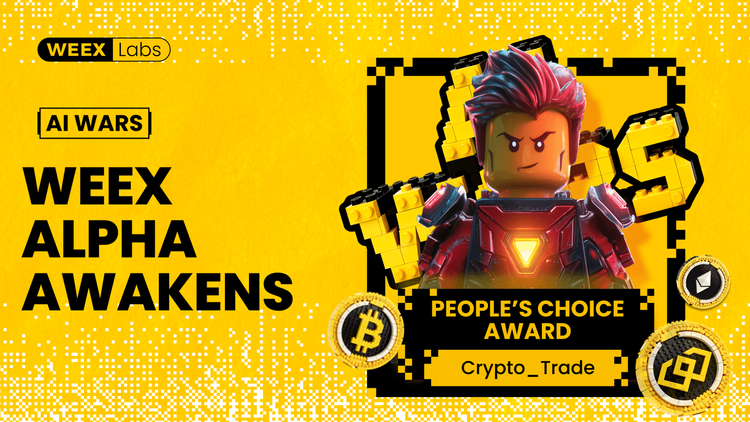
How a Structured AI Crypto Trading Bot Won at the WEEX Hackathon
Crypto_Trade shows how structured inputs and controlled adaptability can build a more stable and reliable AI crypto trading bot within the WEEX AI Trading Hackathon, highlighting a practical path toward scalable AI trading systems.


 App
App