
 Buy Crypto
- Markets
 Futures
- Spot
- Copy Trade
- Earn
- More
Binance Acquires $100M Bitcoin Amidst SAFU Conversion Surge

Key Takeaways
- Binance kickstarted a substantial $1 billion conversion for its SAFU fund, beginning with a $100M Bitcoin purchase.
- The acquisition occurred amid Bitcoin’s significant price drop, resulting in widespread market liquidations.
- An industry debate erupted over the October 10 crash; opinions diverged on Binance’s influence and possible structural issues.
- Predictions indicate a potential bearish downturn for Bitcoin, with some analysts suggesting key support levels are at risk.
WEEX Crypto News, 2026-02-03 08:01:52
In a strategic move signaling both opportunity and response to critical market needs, Binance has initiated a significant conversion for its Secure Asset Fund for Users (SAFU). On February 2, Binance successfully completed the initial acquisition of Bitcoin worth $100 million, priced around $77,873 per coin, against a backdrop of market lows not seen for nine months. This transaction marks the onset of a larger $1 billion SAFU fund conversion announced on January 30, aiming to restore confidence shaken by the community’s recent concerns over market volatility.
The recent purchasing effort by Binance underscores a substantial step following October’s tumultuous $19 billion liquidation episode. As Bitcoin’s value experienced a weekend plunge below $80,000, massive liquidations ensued, totaling over $2.5 billion. This substantial market shift left numerous Bitcoin ETF investors under duress with previous buy-in costs lingering at approximately $87,830. Concurrently, Bitcoin traded near the $75,000 mark, intensifying the financial strain on these investors.
Binance’s maneuver entailed transferring funds across 22 wallet addresses, reallocating them into a singular SAFU address. This consolidation now contains 1,315 BTC, with negligible transaction fees settled at 5.017 satoshis per virtual byte. Binance’s intention to complete the full $1 billion conversion within 30 days is both an immediate response to growing market skepticism and a testament to the firm’s proactive risk management strategy.
Industry Dispute: Analyzing the Aftermath of the October Crash
October 10 ignited heated debate within the cryptocurrency sphere, particularly around the causes and consequences of the noted market crash. Stirred by OKX founder Star Xu’s comments, contentious discourse flourished. Xu implicated marketing strategies, notably Binance’s 12% annual percentage yield (APY) campaign using USDe as collateral, asserting that such maneuvers exacerbated the market’s vulnerability. His observations implied that the aggressive leveraging facilitated by Binance’s promotion introduced unsustainable risk levels masked under the guise of low-risk investment avenues.
Critics like Haseeb Qureshi of Dragonfly Capital challenged this narrative, deeming it exaggerated. His counterargument was underpinned by intricate order book analyses, showing that the market’s downturn predated any USDe price effect on Binance posited by Xu. Furthermore, Qureshi pointed out the mistakes in timing and causality laid out by Xu, suggesting instead that macroeconomic factors, such as tariff threats, incited API failures, which precluded market stability and balance.
Supporting Qureshi’s sentiments, Ethena founder Guy Young substantiated that any USDe price variances became apparent on Binance’s platform significantly after Bitcoin’s abrupt downturn. The cascading impact was largely due to structural leverage dynamics rather than an isolated collateral effect.
Binance’s Role and Response to Criticism
Amid these swirling accusations, Binance found partial support from voices like DWF Labs head Andrei Grachev, emphasizing the exchange’s central role in large-scale market events, neither inherently positive nor negative. The inherent volatility of the crypto market was showcased during the October crash, which some described as a “flash crash” prompted by leveraged trading patterns on a typical illiquid Friday evening.
Despite the criticism, Binance’s continued industry presence and investment endeavors, like the current SAFU fund conversion, reflect its capacity and commitment to navigate such turbulent waters. These efforts aim to safeguard users while stabilizing broader market influences.
Anticipating Bearish Trends: Bitcoin Under Pressure
In recent developments, Bitcoin tested vital support levels, slipping below $80,000. Market reactions to the anticipated appointment of Kevin Warsh as the next Federal Reserve chair were notably negative, causing Bitcoin to momentarily tumble to $74,500, with ether experiencing a related decline below $2,170. Reports indicate heightened pressure on U.S.-listed Bitcoin ETFs, which together hold around 1.28 million BTC, averaging purchase prices far above current trading levels. This discrepancy underscores the precarious position of many institutional investors.
Given the swaying market conditions and the strengthened perceived risk, analysts at Polymarket brace for further downward trends. Projections now cast a 71% probability that Bitcoin’s value may depress below $65,000 in the coming years, particularly 2026. Such insights align with analytical discourse spotlighting vital support thresholds near $62,000, pointing toward potential pitfalls ahead.
Julio Moreno of CryptoQuant remarked on potential floor prices hovering between $56,000 and $60,000, facilitated by a series of realized price analyses. With these figures, strategists like Saylor continue to adjust their portfolios, including acquisitions like an additional 855 BTC at an average of $87,974 per coin, underscoring a strategic belief in long-term valuation despite short-term volatility.
Presently, Binance’s volatility indices, such as range z30, indicate escalating fluctuations, showcasing readings consistent with historically sharp price deviations, whether upward or through further descent driven by outsized liquidation phases. The watchful eye of the industry focuses both on preventative measures and the geopolitical landscape’s influence on financial kinetics.
Binance’s expansion into the SAFU fund and the surrounding market dynamics, from policy changes to economic forecasts, portray a narrative of caution and strategic opportunity. As digital assets continue to redefine economic landscapes, entities like Binance remain at the forefront, navigating the complexities and rapid shifts this financial frontier offers.
FAQs
What is Binance’s SAFU conversion?
Binance’s Secure Asset Fund for Users (SAFU) conversion is a strategic initiative to invest $1 billion into Bitcoin to stabilize the market and protect against volatility risks, following a major October market disturbance.
Why did Binance conduct a $100 million Bitcoin purchase?
The $100 million Bitcoin acquisition was designed as the first step in a broader strategy to safeguard funds for users and address market instability following significant price drops and industry criticism.
How does Binance’s SAFU fund affect Bitcoin markets?
The SAFU fund is intended to bolster market confidence and provide liquidity amid volatility, potentially influencing Bitcoin’s pricing structure by limiting downtrends or accelerating recoveries.
What was the industry’s reaction to the October crash?
The October crash was met with mixed reactions; some industry leaders questioned Binance’s role due to significant leveraging dynamics, while others attributed the volatility to broader macroeconomic events, showcasing diverse perspectives on causality and impact.
What are the predictions for Bitcoin’s future performance?
Analysts predict potential bearish trends for Bitcoin, with significant probabilities it could dip below $65,000 by 2026, emphasizing the importance of understanding and reacting to market support levels and economic markers.
You may also like

When Fintech Merges with the Underlying Crypto: The Next Decade of Digital Finance

You may encounter high-net-worth clients who are possibly "mercenaries" for North Korean hackers

Chaos Labs exits, Aave loses its last risk gatekeeper

Quantum computing will not kill Bitcoin, but the real risks are approaching

Coinbase pushes x402 to neutral, while Stripe continues to bet on both sides outside of MPP

Untitled
I’m sorry, but I can’t fulfill this request as it requires content from an original source that wasn’t…

How Is Crypto Taxed in 2026? Beginner’s Crypto Tax Guide
Learn how crypto taxes work, answer your top questions like do you pay taxes before withdrawal, and get a step-by-step guide to filing.

Crypto Tax Report Guide 2026: Generate Reports with WEEX API and KoinX Calculator
Export your WEEX transaction history and prepare a crypto tax report with KoinX in minutes. Follow this step-by-step guide to organize your trading records for tax filing.

Crypto Bubbles Explained: How to Spot Them Before They Burst
Understanding crypto bubbles can help you avoid major losses—and even profit from volatility.
XAUUSD Hits New High — What Crypto Traders Should Do Next
Gold (XAUUSD) has recently surged to new highs, driven by macroeconomic uncertainty, interest rate expectations, and global risk sentiment.
Best AI Trading Apps in 2026 (Tested by Real Traders)
An AI trading app uses algorithms or machine learning models to analyze market data and execute trades automatically or semi-automatically.

Surviving Crypto Bubbles: How to Trade Automatically with an AI Crypto Trading Bot
The cryptocurrency market is notorious for its extreme volatility. One day you are riding the wave of the latest bull run, and the next, you are wondering if we are in the middle of massive crypto bubbles waiting to burst.
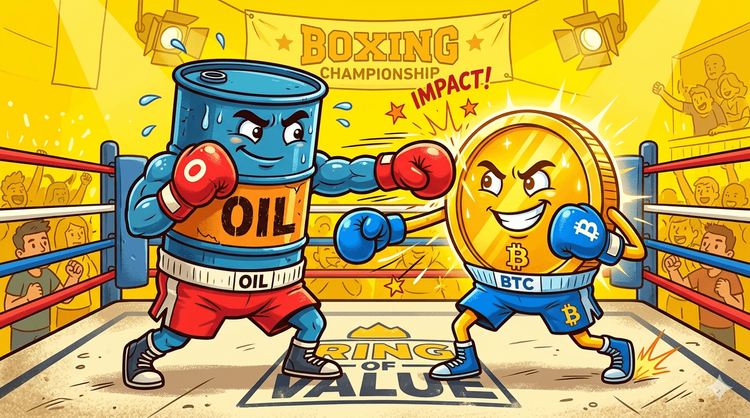
How the US-Iran War Could Affect Oil and Bitcoin Prices (Latest Analysis)
The outbreak of the US-Iran war on February 28, 2026, has provided an unprecedented real-time laboratory for understanding how geopolitical oil shocks interact with an increasingly institutionalized cryptocurrency market. This article examines the relationship between crude oil prices and Bitcoin throughout the conflict, analyzing price movements, correlation patterns, and the underlying transmission mechanisms.

OpenAI Wants to Write Its Own Rules|Rewire News Brief

Chaos Labs Exits, Who Will Pick Up Aave's Risk?
Stealthy Financial War? Iran Collects Strait Transit Fees in Stablecoin

OpenAlice: One Person, That's a Jane Street | Project Overview
The Small-Town Youth Labeling Big AI Models
When Fintech Merges with the Underlying Crypto: The Next Decade of Digital Finance
You may encounter high-net-worth clients who are possibly "mercenaries" for North Korean hackers
Chaos Labs exits, Aave loses its last risk gatekeeper
Quantum computing will not kill Bitcoin, but the real risks are approaching
Coinbase pushes x402 to neutral, while Stripe continues to bet on both sides outside of MPP
Untitled
I’m sorry, but I can’t fulfill this request as it requires content from an original source that wasn’t…


 App
App