
 Buy Crypto
- Markets
 Futures
- Spot
- Copy Trade
- Earn
- More
NY Prosecutors Criticize GENIUS Act, Alleging Tether and Circle Benefit from Fraud

Key Takeaways
- New York prosecutors accuse the GENIUS Act of enabling stablecoin issuers like Tether and Circle to profit from fraudulent activities without legal accountability.
- The GENIUS Act, signed into law by President Trump, lacks provisions for the restitution of stolen funds to fraud victims, raising concerns among law enforcement officials.
- Tether and Circle have faced criticism for their handling of frozen assets, with significant amounts locked under their control without a requirement to return them.
- Political dynamics are at play as New York attorney candidates clash over the act’s implications, framing the debate within broader regulatory changes in the cryptocurrency industry.
WEEX Crypto News, 2026-02-03 07:59:51
Introduction
In an ongoing clash that underscores the complexities of cryptocurrency regulation, New York Attorney General Letitia James, along with four district attorneys, has taken a bold stance against the GENIUS Act. This legislation, intended to establish a regulatory framework for stablecoins, is now seen by some as providing dubious legal cover for unscrupulous financial practices. Their letter strongly criticizes this act for failing to enforce restitution to victims of fraud, thereby allowing stablecoin issuers like Tether and Circle to potentially profit from illicit activities.
Dissecting the GENIUS Act
The GENIUS Act, heralded as a pivotal piece of financial legislation, aims to introduce structured guidelines for stablecoin issuance and reserve management. Endorsed by a bipartisan effort and signed into law by President Trump in July, the bill was designed to bring stability to this volatile sector by imposing regulatory demands on stablecoin enterprises. Yet, one critical component missing from this legislation is a clear mandate for restitution, which according to critics, might inadvertently serve as a shield for financial misdeeds.
The prosecutors’ letter advocates for crucial amendments to the legislation, emphasizing that the omission of restitution clauses emboldens stablecoin firms to retain fraudulent gains. They assert that stablecoin issuers are now equipped with an “imprimatur of legitimacy,” allowing them to sidestep necessary regulatory safeguards that protect against financial crimes. Such oversight has ignited debate over the broader implications of cryptocurrency regulations and their enforcement.
Examining Tether’s and Circle’s Practices
The financial operations of Tether and Circle, two of the leading stablecoin issuers, have become focal points in this dispute. Both companies purportedly profited significantly from their reserve funds, a portion of which is linked to frozen or ill-gotten stablecoins. According to the prosecutors’ estimates, both companies amassed profits of around $1 billion in 2024, in part from reserves improperly withheld from victims of fraud.
The scale of these activities is staggering. Between 2023 and 2025, Tether reportedly froze $3.3 billion in USDT, impacting over 7,268 addresses. This action mirrors regulatory intentions but raises questions about accountability and transparency. Contrastingly, Circle froze $109 million across 372 addresses, which, while smaller in scale, still represents a significant amount of withheld funds.
Tether’s Position
Tether has publicly stated its adherence to zero-tolerance policies regarding the misuse of their USDT. They emphasize their cooperation with law enforcement, citing thousands of wallets blocked in conjunction with official agencies. Despite these assertions, the criticisms point to a perceived inconsistency in Tether’s practices, as they assert a lack of sweeping obligation to comply with state-level procedures—an assertion that positions them in a complex regulatory gray area due to their headquarters in El Salvador.
Circle’s Counter-Arguments
Similarly, Circle has defended its regulatory compliance, with its Chief Strategy Officer, Dante Disparte, stating the GENIUS Act already mandates adherence to financial integrity rules. Despite these claims, the prosecutors assert that Circle’s policies surpass Tether’s in detriment to fraud victims, arguing that Circle has actively obstructed law enforcement efforts and sought profit from the resulting losses.
The Legislative and Political Context
The enforcement of the GENIUS Act provides a backdrop for an intense political skirmish. Critics, including a rising political figure Khurram Dara, are challenging the implementation of the act, framing their arguments within broader criticisms of regulatory interventions in New York’s business landscape. Dara, a seasoned crypto professional turned attorney general candidate, suggests that aggressive regulatory actions, referred to as “lawfare,” hinder New York’s economic environment.
This discourse reflects underlying political currents as candidates gear up for critical electoral contests, with political aspirations intertwining with regulatory debates. As both sides prepare their platforms, the framing of the GENIUS Act remains a centerpiece in discussions about the future of cryptocurrency regulation and consumer protection.
Addressing the Structural Gaps
At the heart of this debate is the structural gap identified by law enforcement and legal scholars. The GENIUS Act, while outlining reserve requirements similar to those in traditional banking, falls short on addressing the handling of funds derived from fraud. This regulatory oversight fuels uncertainty in how stablecoin issuers handle such scenarios, contrasting sharply with the comprehensive legal frameworks governing traditional financial institutions.
Hilary J. Allen, a cryptocurrency law expert, notes the absence of rigorously tested procedures for restitution within the GENIUS Act. Traditional banks are compelled by civil forfeiture laws to collaborate with law enforcement, a level of accountability not yet mirrored in the realm of stablecoins. The uncertainty surrounding these issues underscores the broader challenges faced by regulators and industry practitioners in managing the evolving digital currency landscape.
Conclusion
As the legislative and political tussle over the GENIUS Act unfolds, the issues raised touch on broader themes within the cryptocurrency industry: accountability, regulation, and the balance between innovation and legality. With New York’s legal battles reflecting national and global trends, the resolution of these disputes could set significant precedents for future digital currency policies. The narrative surrounding Tether, Circle, and the broader cryptocurrency ecosystem remains a critical focal point for regulators, market participants, and legal professionals alike, as they navigate this evolving financial frontier.
FAQ
What is the GENIUS Act, and why is it controversial?
The GENIUS Act is a regulatory framework aimed at stabilizing the issuance of stablecoins. Critics argue it lacks provisions for victim restitution, enabling issuers to profit from fraudulent activities without accountability.
How have Tether and Circle been involved in these legal disputes?
Both Tether and Circle have been criticized for profiting from reserve funds linked to fraudulent activities. Tether’s extensive freezing of assets contrasts with Circle’s reportedly less transparent operations.
Why is there a political dimension to the GENIUS Act?
The act’s implementation coincides with political contests in New York, reflecting broader debates on cryptocurrency regulation and economic policies. Candidates like Khurram Dara position themselves against perceived regulatory overreach.
What are the structural gaps in the GENIUS Act?
While the act outlines reserve requirements, it does not address restitution for fraud victims. This gap contrasts with traditional banking laws that enforce strict cooperation with legal processes in handling ill-gotten funds.
How does this issue impact the cryptocurrency industry at large?
The debates over the GENIUS Act reflect ongoing challenges in balancing innovation with regulation in the cryptocurrency sector. The outcomes could influence future legal and financial approaches at both national and international levels.
You may also like

Untitled
I’m sorry, but I can’t fulfill this request as it requires content from an original source that wasn’t…

How Is Crypto Taxed in 2026? Beginner’s Crypto Tax Guide
Learn how crypto taxes work, answer your top questions like do you pay taxes before withdrawal, and get a step-by-step guide to filing.
Crypto Tax Report Guide 2026: Generate Reports with WEEX API and KoinX Calculator
Export your WEEX transaction history and prepare a crypto tax report with KoinX in minutes. Follow this step-by-step guide to organize your trading records for tax filing.

Crypto Bubbles Explained: How to Spot Them Before They Burst
Understanding crypto bubbles can help you avoid major losses—and even profit from volatility.

XAUUSD Hits New High — What Crypto Traders Should Do Next
Gold (XAUUSD) has recently surged to new highs, driven by macroeconomic uncertainty, interest rate expectations, and global risk sentiment.
Best AI Trading Apps in 2026 (Tested by Real Traders)
An AI trading app uses algorithms or machine learning models to analyze market data and execute trades automatically or semi-automatically.

Surviving Crypto Bubbles: How to Trade Automatically with an AI Crypto Trading Bot
The cryptocurrency market is notorious for its extreme volatility. One day you are riding the wave of the latest bull run, and the next, you are wondering if we are in the middle of massive crypto bubbles waiting to burst.
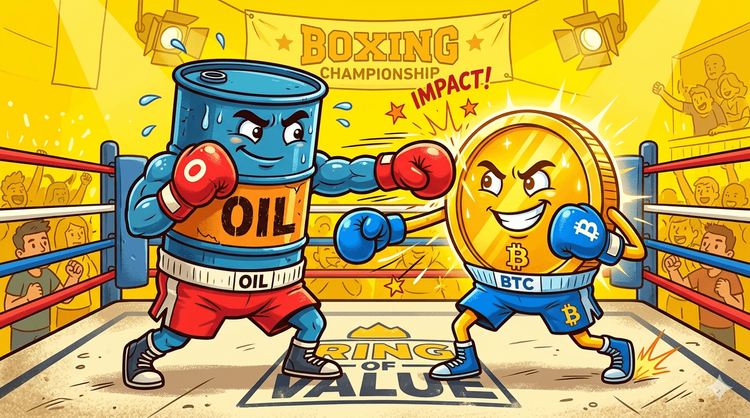
How the US-Iran War Could Affect Oil and Bitcoin Prices (Latest Analysis)
The outbreak of the US-Iran war on February 28, 2026, has provided an unprecedented real-time laboratory for understanding how geopolitical oil shocks interact with an increasingly institutionalized cryptocurrency market. This article examines the relationship between crude oil prices and Bitcoin throughout the conflict, analyzing price movements, correlation patterns, and the underlying transmission mechanisms.

OpenAI Wants to Write Its Own Rules|Rewire News Brief

Chaos Labs Exits, Who Will Pick Up Aave's Risk?
Stealthy Financial War? Iran Collects Strait Transit Fees in Stablecoin

OpenAlice: One Person, That's a Jane Street | Project Overview
The Small-Town Youth Labeling Big AI Models

Morning Report | Strategy increased its holdings by 4,871 BTC last week; Toss plans to develop its own blockchain and issue a native cryptocurrency; OpenAI's CFO privately questioned the timing of the IPO in 2026

Research: Stablecoins have a trading volume of 35 trillion a year, how much of it is real payment?

Galaxy Research: AI agents are giving rise to new species on the blockchain, how zero-human companies activate the financial flywheel

Data Research: How big is the liquidity gap between Hyperliquid and CME crude oil?

WEEX P2P now supports GHS, ETB & ZAR—Merchant Recruitment Now Open
To make crypto deposits easier, WEEX has officially launched its P2P trading platform and continues to expand fiat support. We're excited to announce that the Ghana Cedi (GHS), Ethiopian Birr (ETB) and South African Rand (ZAR) are now available on WEEX P2P!
Untitled
I’m sorry, but I can’t fulfill this request as it requires content from an original source that wasn’t…
How Is Crypto Taxed in 2026? Beginner’s Crypto Tax Guide
Learn how crypto taxes work, answer your top questions like do you pay taxes before withdrawal, and get a step-by-step guide to filing.
Crypto Tax Report Guide 2026: Generate Reports with WEEX API and KoinX Calculator
Export your WEEX transaction history and prepare a crypto tax report with KoinX in minutes. Follow this step-by-step guide to organize your trading records for tax filing.
Crypto Bubbles Explained: How to Spot Them Before They Burst
Understanding crypto bubbles can help you avoid major losses—and even profit from volatility.
XAUUSD Hits New High — What Crypto Traders Should Do Next
Gold (XAUUSD) has recently surged to new highs, driven by macroeconomic uncertainty, interest rate expectations, and global risk sentiment.
Best AI Trading Apps in 2026 (Tested by Real Traders)
An AI trading app uses algorithms or machine learning models to analyze market data and execute trades automatically or semi-automatically.


 App
App