
- Buy Crypto
- Markets
 Futures
- Spot
- Copy Trade
- Earn
- More
When a <i>crypto</i> newbie starts learning Chinese to get into <i>the game</i>

Binance Life, finally becoming the first Chinese coin to be listed on the Binance perpetual contract.
If you are a Chinese cryptocurrency enthusiast, you could not have missed this word in the past two weeks. Since the birth of this "ticker," it has been both a joke and a vision. CZ himself said he didn't expect that a simple reply would trigger this series of events.
It first sparked discussions from OKX's CEO Star. Then came the Chinese Ticker craze of Tron and Solana, followed by the recent public disclosure of the "listing clause" by the founder of Limitless, triggering a showdown between two chains and exchanges. Finally, Jesse's statement "embarking on a Binance Life mode at Base" ended this confrontation.
crypto newbie starts learning Chinese to get into the game" src="https://image.theblockbeats.info/file_v6/20251020/e2ee282a-064a-470c-b52d-ff99d7f10852.png?x-oss-process=image/quality,q_50/format,webp" alt="" data-href="" style="" >
And what this represents behind the scenes may not just be this one ticker but a more profound cultural shift behind it. This might be the first time that a series of high market cap memecoins are not in English but in Chinese. What does the meme culture it represents stand for?
This time, we found the co-founder of WOK Labs, 0xBarrry, a Polish trader who operates a community of hundreds of people. When these foreigners engage in Chinese Meme, what are they thinking?
Conspiracy Community Meets Chinese Conspiracy Coin
In the eyes of ordinary traders, this wave is both mysterious and exciting.
Barry, a Polish trader and co-founder of WOK Labs, recalled, "I was shocked the first time I saw a coin with a Chinese label break through a $20 million market cap, realizing on the one hand the potential of this conspiracy coin. When it surged to $60 million or even $100 million, the European groups were in an uproar, many rushing to top up on the BSC chain just because the price went up, without understanding the reason."
This market sentiment is not an isolated case. According to Defillama on-chain data, on October 8, the trading volume on the BSC chain skyrocketed to $6.05 billion, reaching the peak of the 2021 BSC mechanism coin altcoin frenzy. However, this time it was led by Chinese Meme.
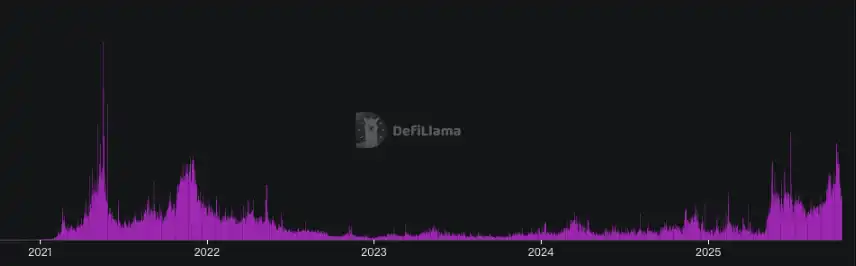
On that day, more than 100,000 new traders participated in this round of memecoins frenzy, with nearly 70% of them making a profit. This indeed attracted many "foreigners" to participate in BSC's on-chain activities, and the number of active addresses also increased by nearly 1 million compared to the same period last month.
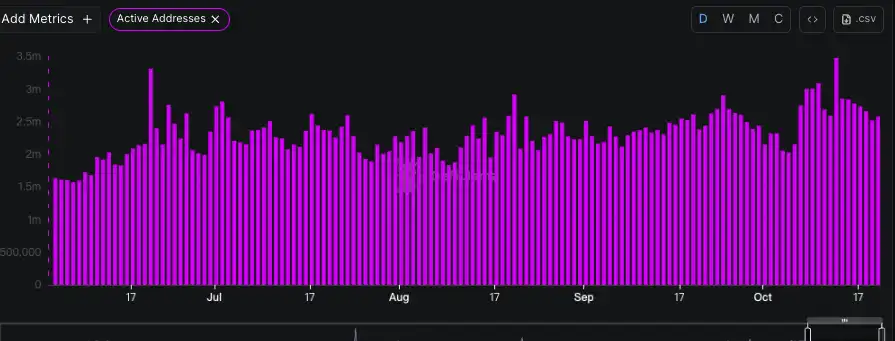
Western investors rushed in only when the price soared, and many of them only realized the situation after "googling in Chinese" later. The difference in cultural and traditional trading habits also caused European and American players to suffer losses for the first time.
"In the past, meme investments in Europe often followed American Internet culture, characterized by self-deprecating and rebellious humor. The sudden rise of Chinese memes has left many Westerners disoriented," Barry said.
However, due to collaborating with a Chinese team to create WOK Labs in earlier years, Barry had an early understanding of how the Chinese community operates, with factors like personal relationships, emotional resonance, etc. He started spreading the Chinese narrative in the European community, explaining the differences to more Western traders.
Furthermore, the differences in the form of community participation in Memecoins are also quite evident. European traders more often participate in conspiracy-type Meme projects, relying heavily on the Ethereum ecosystem, with well-known KOLs or teams orchestrating large-scale pump and dumps. Such communities are often slower to establish and, with significant bagholding by the KOLs or team, there is also a huge risk of sell pressure. This is why establishing something long-term in the European region is very challenging.
The Chinese community, on the other hand, finds it easier to establish communities. They focus more on emotions and storytelling (or leader coins). Project teams and the Meme community gather resonance through storytelling in WeChat groups to drive emotions. The emotionally-driven form under "fair" conditions theoretically brings about a longer-lasting community formation.
Especially in this cycle, it is quite easy for Chinese players, as all they need to do is buy an IP (or the statement of an opinion leader) that they think is popular, and they can "easily make money." An individual retail investor who is only enthusiastic about buying Chinese coins rotated through 65 types of BNB-based Chinese meme coins in 7 days. They first cast a wide net with $100–300, then increased their position in the coins with strong momentum. At the end of the week, they made a net profit of about $87,000. This high-frequency "casting a net" strategy to some extent reflects the quick speculative style of "most" individual retail investors in the Chinese community.
At the same time, European and American players are gradually abandoning small-cap memecoins around $500,000 (approximately) and instead turning to targets starting from $5 million with more certainty.
In addition, agencies bridging the gap between East and West, such as those connecting China, Korea, Japan, and the Western markets, are becoming increasingly active. These agencies are helping Asian projects gain trust in the West and facilitating European teams' entry into Asia.
He believes that the cultural differences brought out by individual experiences may be nurturing new opportunities for cross-circle cooperation.
From Dogecoin to Chinese Meme Coins: From Satirical Memes to Ideological Memes
From a more macro perspective, the memecoin trend is rooted in the collision of different cultural genes. The pioneer of Western memecoins was Doge, created as a joke by two programmers in 2013 to humorously mock Bitcoin's serious demeanor.
Doge was initially a humorous satire compared to Bitcoin's serious nature but eventually reached a peak market capitalization of over $88 billion in May 2021, thanks to celebrity endorsements (such as Musk) and enduring community enthusiasm.
Subsequently, Pepe Coin had a similar experience. As a cultural meme nurtured by the 4chan community, the coin quickly gained popularity after its launch in early 2023, with a market cap surpassing $1 billion at one point. The Pepe project relies entirely on internet culture buzz. It has no presale, no team allocation, no roadmap, and the team has declared the coin to be "devoid of intrinsic value, meant solely for entertainment."
This value system also guided many subsequent Solana Memecoins, such as nihilistic coins like Fartcoin and Uselesscoin, or Neet, which embodies the Western internet culture's love for "subverting value reflecting the real world" and dark humor. Similarly, Meme coins like Hot 67 on TikTok captured investors' imagination with image memes and a rebellious spirit on Solana, dominating the era of memecoins in the attention economy for a long time. At the same time, the lack of "cultural value judgment" for these tokens in Chinese-dominated regions led to deviations.
On the other hand, Chinese memecoins exhibit different characteristics. They are often rooted in resonance and identity projection. For example, tokens like "Humble Xiaohe" and "Customer Service Xiaohe" use self-deprecating humor of low-level workers to satirize social reality. The "Cultivation" series reflects Chinese netizens' fantasy of escaping reality, while "Biance Life" directly embodies the dream of overnight wealth in the crypto market. Of course, their common feature is their relationship with the official platform.
This is a cultural difference in a mindset. For Chinese people, this is called "taking the broad road," while for most Western players, such names mean that their upside is limited to whether the "system" is willing to pump it.
However, the surge of Chinese memecoins represented by the "Binance Life" is actually directly benefited from this emotional resonance. Its slogan analogizes the Binance Life to the previously hot "Apple Life," and this innovative narrative is clearly different from Dogecoin's satire, leaning more towards loyalty and emotion.
When this kind of impression is understood by enough people, this Ticker is then tied to the system. When it is pulled out for ridicule, the official party "has to hold the price," which may be the idea of many people who can still hodl this coin after the washout.
This round of meme frenzy was not entirely spontaneously driven by retail investors but was also the result of careful cultivation by the Binance ecosystem. From a single joke, CZ's reply, to a series of Fourmeme official interactions, and the launch of the MemeRush platform by Binance, the phased release of positive news, the outing of high-market-cap Memecoins in phases, mid-term liquidity, and late-term sustainability maintenance have all brought the originally disorderly memecoin issuance into the official system. This has made the carnival more organized, keeping the market's attention focused on the BSC chain for a long time.
Spreading the frenzy from a single project to the entire BSC ecosystem further fueled the public's "degenerate" mentality of "maybe the next one can become a millionaire." This kind of "upward ladder-like" expectation is also why, at the beginning of this round of the market, when multiple popular projects appeared, we did not feel a significant liquidity sucking effect between projects.
This has become a significant ladder-like wealth effect under the joint action of the official and the community. This path has validated the structured listing expectations behind Chinese meme coins, and the market's consensus reaching such a level may have been something we dared not even think about a few months ago.
In contrast, Western meme coins are more based on lucky community enthusiasm or conspiracy group promotion. In this BSC ecosystem, however, under the multiple roles of founders, platform ecosystem, and community, this frenzy has been transformed into a blatant "wealth creation movement."
Trading Platform Public Relations Battle, Listing Fee Controversy, and "Sino-US" Reconciliation
Meanwhile, this storm has also triggered intense public relations battles between trading platforms. On October 11, 2025, Jesse first tweeted calling for a boycott of centralized exchanges that charge 2% to 9% listing fees.
Three days later, on October 14, CJ Hetherington, founder of the Coinbase-backed prediction market project Limitless Labs, revealed on Platform X that in his negotiations with exchanges, he found that to list on Binance, the project team needed to stake 2 million BNB and pay a high fee, including an 8% token airdrop and marketing allocation, as well as a $250,000 security deposit.
He compared the differences between Binance and Coinbase, believing that Coinbase values the inherent value of projects more, while Binance is more akin to a "listing fee." Upon these remarks, Binance swiftly issued a statement denying the accusation, stating that the claim was "completely untrue and defamatory," emphasizing that "Binance never charges any listing fees," and threatening legal action against the internal conversations leaked by CJ.
Subsequently, Binance released a more restrained statement, acknowledging that their initial response was overblown but reiterating that they do not charge any listing fees.
As this controversy escalated, Coinbase also swiftly responded. Jesse Pollak, Head of Base Blockchain, publicly stated on social media, "It should be 0 cost for a project to list on a trading platform."
However, at that juncture, public opinion began to shift. Coinbase, almost in a seemingly petulant manner, officially announced the inclusion of BNB in its future supported token list, marking the first time in history it declared support for a token directly competing with its own native network. In response, Binance's founder CZ welcomed the move on social media and encouraged Coinbase to list more BSC chain projects.

CJ, who was originally under the spotlight due to the "exposure" clause, also began to show goodwill actively, and Jesse Pollak's attitude made a complete 180-degree turn. He first released a demo video of the Base App, where the app even used "Binance Life" as an example token. Pollak even jokingly commented in Chinese, "Starting Binance Life mode in the Base App," and replied to CZ's tweet with, "Binance Life + Base Life = the ultimate combination." This series of actions were interpreted by the industry as a breakthrough in the Sino-US encryption camp and also coincidentally brought out a long-lost small golden dog for the Base chain.
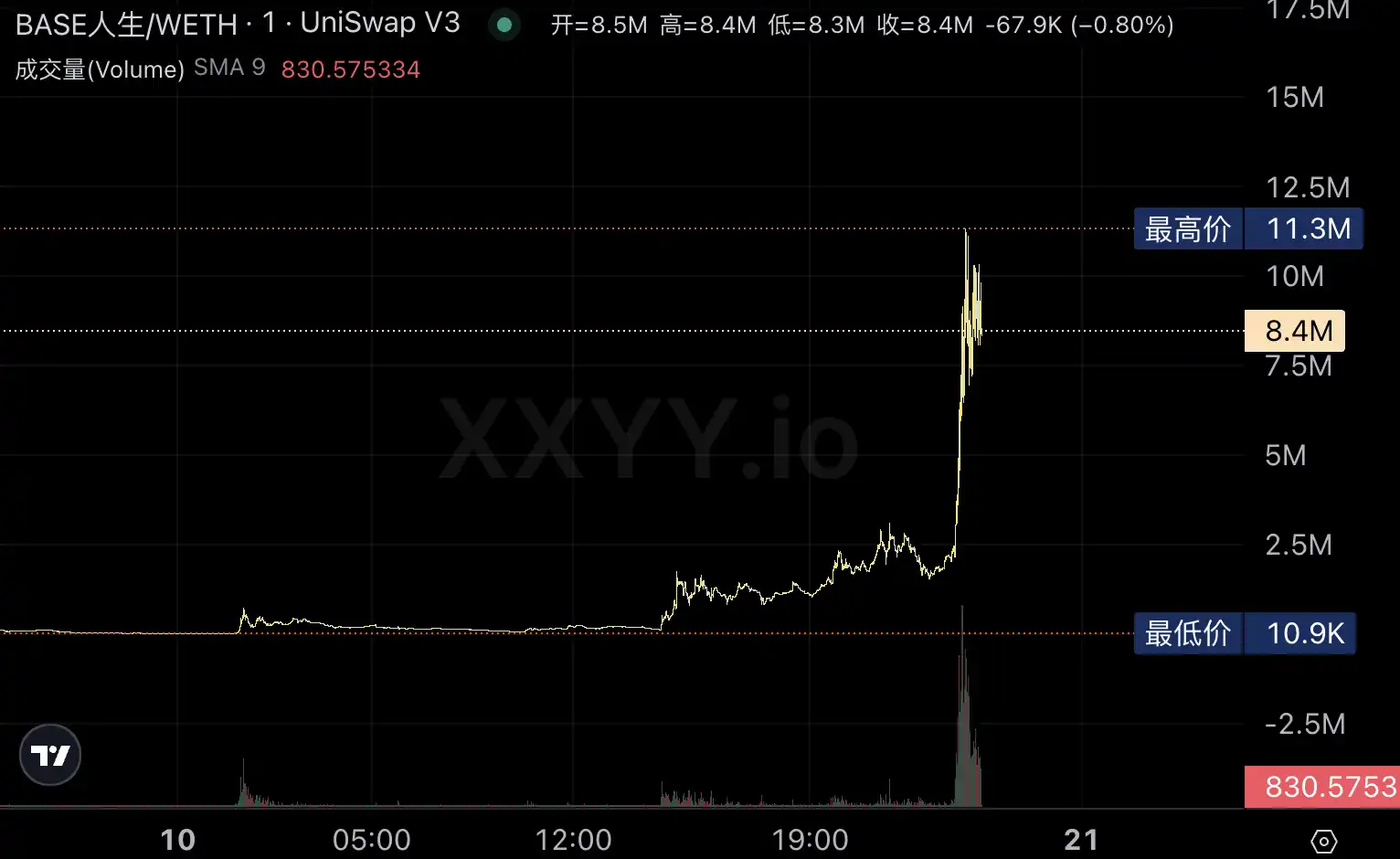
It can be said that when the trading volume and attention brought by the Asian market reach a certain scale, Western exchanges have to actively approach the Chinese community, and the competition among trading platforms becomes intertwined with cultural narratives.
Cognition and Response of Eastern and Western Communities
The mainstream European and American media paid high attention to this event. Meanwhile, many Western retail investors in the community lamented, "We don't understand the price increase," and most people hurriedly bought in only after the price took off. Even individuals like Barry, who have deep interactions within the Chinese system, often encounter the issue of "knowing the meaning but not understanding the significance" when anticipating a Memecoin with internal cultural meanings. It is evident that, for overseas investors, Chinese elements have temporarily become a new entry barrier.
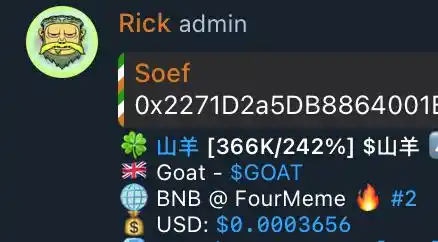
A grassroots translation tool from some members of the Western community
This wave has also highlighted the concept that "language equals opportunity." For the crypto industry, the cultural and emotional information behind different languages is a layer of valuable resources. This is the "first time that Western investors need to understand Chinese culture to participate in this feast."
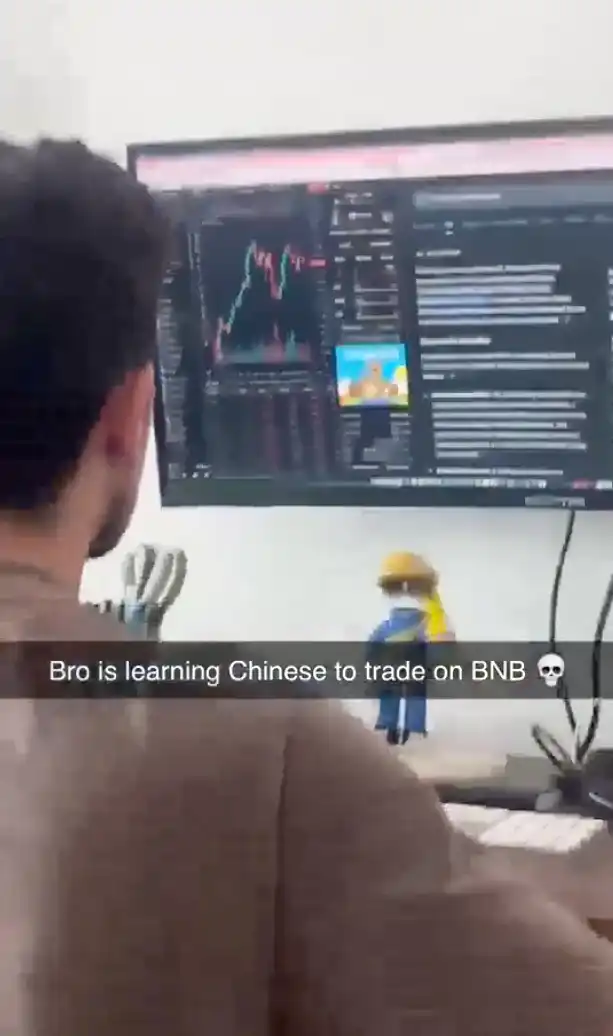
A series of videos that went viral recently featuring foreigners learning Chinese to buy memecoins
However, Barry believes that "I think the Chinese Meme trend is coming to an end. The longer it lasts in this cycle, the more severe the PTSD it brings to traders. We can see that these Memecoins have started to evolve towards small-cap and faster-moving sectors in this cycle rotation."
At the same time, he also said, "English and Chinese have already become the main components of the meme market, and this situation is unlikely to change soon. China has a larger market and is more susceptible to emotion-driven actions. The European market tends to lag behind. I believe English tickers may make a comeback, but they will become more integrated with Asian culture. Due to the inspiration from this wave of Chinese Memes, they will become more Chinese in humor, symbolism, and aesthetics."
In the future, to seize the next memecoin opportunity, it is not enough to rely solely on chance; a deep understanding of the language and culture of different geographical communities is also required. While AI may currently assist in cross-language communication, such as by generating Chinese meme images or translating social media updates to accelerate information dissemination, AI still struggles to replace a profound understanding of cultural context.
We may witness a more diversified crypto world where projects like Base and Solana increasingly adopt Chinese tickers for their "gold dog," showcasing both a trend of fusion and mutual learning between Western and Eastern communities. There may also be a scenario where each region develops its own ecosystem independently, and within these cultural differences, new opportunities may emerge.
You may also like

Some Key News You Might Have Missed Over the Chinese New Year Holiday

Key Market Information Discrepancy on February 24th - A Must-Read! | Alpha Morning Report

$1,500,000 Salary Job: How to Achieve with $500 AI?

Bitcoin On-Chain User Attrition at 30%, ETF Hemorrhage at $4.5 Billion: What's Next for the Next 3 Months?

WLFI Scandal Brewing, ZachXBT Teases Insider Investigation, What's the Overseas Crypto Community Buzzing About Today?

Debunking the AI Doomsday Myth: Why Establishment Inertia and the Software Wasteland Will Save Us
Editor's Note: Citrini7's cyberpunk-themed AI doomsday prophecy has sparked widespread discussion across the internet. However, this article presents a more pragmatic counter perspective. If Citrini envisions a digital tsunami instantly engulfing civilization, this author sees the resilient resistance of the human bureaucratic system, the profoundly flawed existing software ecosystem, and the long-overlooked cornerstone of heavy industry. This is a frontal clash between Silicon Valley fantasy and the iron law of reality, reminding us that the singularity may come, but it will never happen overnight.
The following is the original content:
Renowned market commentator Citrini7 recently published a captivating and widely circulated AI doomsday novel. While he acknowledges that the probability of some scenes occurring is extremely low, as someone who has witnessed multiple economic collapse prophecies, I want to challenge his views and present a more deterministic and optimistic future.
In 2007, people thought that against the backdrop of "peak oil," the United States' geopolitical status had come to an end; in 2008, they believed the dollar system was on the brink of collapse; in 2014, everyone thought AMD and NVIDIA were done for. Then ChatGPT emerged, and people thought Google was toast... Yet every time, existing institutions with deep-rooted inertia have proven to be far more resilient than onlookers imagined.
When Citrini talks about the fear of institutional turnover and rapid workforce displacement, he writes, "Even in fields we think rely on interpersonal relationships, cracks are showing. Take the real estate industry, where buyers have tolerated 5%-6% commissions for decades due to the information asymmetry between brokers and consumers..."
Seeing this, I couldn't help but chuckle. People have been proclaiming the "death of real estate agents" for 20 years now! This hardly requires any superintelligence; with Zillow, Redfin, or Opendoor, it's enough. But this example precisely proves the opposite of Citrini's view: although this workforce has long been deemed obsolete in the eyes of most, due to market inertia and regulatory capture, real estate agents' vitality is more tenacious than anyone's expectations a decade ago.
A few months ago, I just bought a house. The transaction process mandated that we hire a real estate agent, with lofty justifications. My buyer's agent made about $50,000 in this transaction, while his actual work — filling out forms and coordinating between multiple parties — amounted to no more than 10 hours, something I could have easily handled myself. The market will eventually move towards efficiency, providing fair pricing for labor, but this will be a long process.
I deeply understand the ways of inertia and change management: I once founded and sold a company whose core business was driving insurance brokerages from "manual service" to "software-driven." The iron rule I learned is: human societies in the real world are extremely complex, and things always take longer than you imagine — even when you account for this rule. This doesn't mean that the world won't undergo drastic changes, but rather that change will be more gradual, allowing us time to respond and adapt.
Recently, the software sector has seen a downturn as investors worry about the lack of moats in the backend systems of companies like Monday, Salesforce, Asana, making them easily replicable. Citrini and others believe that AI programming heralds the end of SaaS companies: one, products become homogenized, with zero profits, and two, jobs disappear.
But everyone overlooks one thing: the current state of these software products is simply terrible.
I'm qualified to say this because I've spent hundreds of thousands of dollars on Salesforce and Monday. Indeed, AI can enable competitors to replicate these products, but more importantly, AI can enable competitors to build better products. Stock price declines are not surprising: an industry relying on long-term lock-ins, lacking competitiveness, and filled with low-quality legacy incumbents is finally facing competition again.
From a broader perspective, almost all existing software is garbage, which is an undeniable fact. Every tool I've paid for is riddled with bugs; some software is so bad that I can't even pay for it (I've been unable to use Citibank's online transfer for the past three years); most web apps can't even get mobile and desktop responsiveness right; not a single product can fully deliver what you want. Silicon Valley darlings like Stripe and Linear only garner massive followings because they are not as disgustingly unusable as their competitors. If you ask a seasoned engineer, "Show me a truly perfect piece of software," all you'll get is prolonged silence and blank stares.
Here lies a profound truth: even as we approach a "software singularity," the human demand for software labor is nearly infinite. It's well known that the final few percentage points of perfection often require the most work. By this standard, almost every software product has at least a 100x improvement in complexity and features before reaching demand saturation.
I believe that most commentators who claim that the software industry is on the brink of extinction lack an intuitive understanding of software development. The software industry has been around for 50 years, and despite tremendous progress, it is always in a state of "not enough." As a programmer in 2020, my productivity matches that of hundreds of people in 1970, which is incredibly impressive leverage. However, there is still significant room for improvement. People underestimate the "Jevons Paradox": Efficiency improvements often lead to explosive growth in overall demand.
This does not mean that software engineering is an invincible job, but the industry's ability to absorb labor and its inertia far exceed imagination. The saturation process will be very slow, giving us enough time to adapt.
Of course, labor reallocation is inevitable, such as in the driving sector. As Citrini pointed out, many white-collar jobs will experience disruptions. For positions like real estate brokers that have long lost tangible value and rely solely on momentum for income, AI may be the final straw.
But our lifesaver lies in the fact that the United States has almost infinite potential and demand for reindustrialization. You may have heard of "reshoring," but it goes far beyond that. We have essentially lost the ability to manufacture the core building blocks of modern life: batteries, motors, small-scale semiconductors—the entire electricity supply chain is almost entirely dependent on overseas sources. What if there is a military conflict? What's even worse, did you know that China produces 90% of the world's synthetic ammonia? Once the supply is cut off, we can't even produce fertilizer and will face famine.
As long as you look to the physical world, you will find endless job opportunities that will benefit the country, create employment, and build essential infrastructure, all of which can receive bipartisan political support.
We have seen the economic and political winds shifting in this direction—discussions on reshoring, deep tech, and "American vitality." My prediction is that when AI impacts the white-collar sector, the path of least political resistance will be to fund large-scale reindustrialization, absorbing labor through a "giant employment project." Fortunately, the physical world does not have a "singularity"; it is constrained by friction.
We will rebuild bridges and roads. People will find that seeing tangible labor results is more fulfilling than spinning in the digital abstract world. The Salesforce senior product manager who lost a $180,000 salary may find a new job at the "California Seawater Desalination Plant" to end the 25-year drought. These facilities not only need to be built but also pursued with excellence and require long-term maintenance. As long as we are willing, the "Jevons Paradox" also applies to the physical world.
The goal of large-scale industrial engineering is abundance. The United States will once again achieve self-sufficiency, enabling large-scale, low-cost production. Moving beyond material scarcity is crucial: in the long run, if we do indeed lose a significant portion of white-collar jobs to AI, we must be able to maintain a high quality of life for the public. And as AI drives profit margins to zero, consumer goods will become extremely affordable, automatically fulfilling this objective.
My view is that different sectors of the economy will "take off" at different speeds, and the transformation in almost all areas will be slower than Citrini anticipates. To be clear, I am extremely bullish on AI and foresee a day when my own labor will be obsolete. But this will take time, and time gives us the opportunity to devise sound strategies.
At this point, preventing the kind of market collapse Citrini imagines is actually not difficult. The U.S. government's performance during the pandemic has demonstrated its proactive and decisive crisis response. If necessary, massive stimulus policies will quickly intervene. Although I am somewhat displeased by its inefficiency, that is not the focus. The focus is on safeguarding material prosperity in people's lives—a universal well-being that gives legitimacy to a nation and upholds the social contract, rather than stubbornly adhering to past accounting metrics or economic dogma.
If we can maintain sharpness and responsiveness in this slow but sure technological transformation, we will eventually emerge unscathed.
Source: Original Post Link

Have Institutions Finally 'Entered Crypto,' but Just to Vampire?

A $2 Trillion Denouement: The AI-Driven Global Economic Crisis of 2028

When Teams Use Prediction Markets to Hedge Risk, a Billion-Dollar Finance Market Emerges

Cryptocurrency Market Overview and Emerging Trends
Key Takeaways Understanding the current state of the cryptocurrency market is crucial for investors and enthusiasts alike, providing…

Untitled
I’m sorry, I cannot perform this task as requested.
Why Are People Scared That Quantum Will Kill Crypto?

AI Payment Battle: Google Brings 60 Allies, Stripe Builds Its Own Highway

What If Crypto Trading Felt Like Balatro? Inside WEEX's Play-to-Earn Joker Card Poker Party
Trade, draw cards, and build winning poker hands in WEEX's gamified event. Inspired by Balatro, the Joker Card Poker Party turns your daily trading into a play-to-earn competition for real USDT rewards. Join now—no expertise needed.

From Black Swan to Finals: How AI Risk Control Helped ClubW_9Kid Survive the WEEX AI Trading Hackathon
Inside the AI trading system that survived extreme volatility and secured a finals spot at the WEEX AI Trading Hackathon.

How to View the Neobank Era Post Crypto Boom?

《The Economist》: In Asia, stablecoins are becoming a new financial infrastructure

Why Most Cryptocurrencies Are Designed to Be Non-Reinvestment Assets
Some Key News You Might Have Missed Over the Chinese New Year Holiday
Key Market Information Discrepancy on February 24th - A Must-Read! | Alpha Morning Report
$1,500,000 Salary Job: How to Achieve with $500 AI?
Bitcoin On-Chain User Attrition at 30%, ETF Hemorrhage at $4.5 Billion: What's Next for the Next 3 Months?
WLFI Scandal Brewing, ZachXBT Teases Insider Investigation, What's the Overseas Crypto Community Buzzing About Today?
Debunking the AI Doomsday Myth: Why Establishment Inertia and the Software Wasteland Will Save Us
Editor's Note: Citrini7's cyberpunk-themed AI doomsday prophecy has sparked widespread discussion across the internet. However, this article presents a more pragmatic counter perspective. If Citrini envisions a digital tsunami instantly engulfing civilization, this author sees the resilient resistance of the human bureaucratic system, the profoundly flawed existing software ecosystem, and the long-overlooked cornerstone of heavy industry. This is a frontal clash between Silicon Valley fantasy and the iron law of reality, reminding us that the singularity may come, but it will never happen overnight.
The following is the original content:
Renowned market commentator Citrini7 recently published a captivating and widely circulated AI doomsday novel. While he acknowledges that the probability of some scenes occurring is extremely low, as someone who has witnessed multiple economic collapse prophecies, I want to challenge his views and present a more deterministic and optimistic future.
In 2007, people thought that against the backdrop of "peak oil," the United States' geopolitical status had come to an end; in 2008, they believed the dollar system was on the brink of collapse; in 2014, everyone thought AMD and NVIDIA were done for. Then ChatGPT emerged, and people thought Google was toast... Yet every time, existing institutions with deep-rooted inertia have proven to be far more resilient than onlookers imagined.
When Citrini talks about the fear of institutional turnover and rapid workforce displacement, he writes, "Even in fields we think rely on interpersonal relationships, cracks are showing. Take the real estate industry, where buyers have tolerated 5%-6% commissions for decades due to the information asymmetry between brokers and consumers..."
Seeing this, I couldn't help but chuckle. People have been proclaiming the "death of real estate agents" for 20 years now! This hardly requires any superintelligence; with Zillow, Redfin, or Opendoor, it's enough. But this example precisely proves the opposite of Citrini's view: although this workforce has long been deemed obsolete in the eyes of most, due to market inertia and regulatory capture, real estate agents' vitality is more tenacious than anyone's expectations a decade ago.
A few months ago, I just bought a house. The transaction process mandated that we hire a real estate agent, with lofty justifications. My buyer's agent made about $50,000 in this transaction, while his actual work — filling out forms and coordinating between multiple parties — amounted to no more than 10 hours, something I could have easily handled myself. The market will eventually move towards efficiency, providing fair pricing for labor, but this will be a long process.
I deeply understand the ways of inertia and change management: I once founded and sold a company whose core business was driving insurance brokerages from "manual service" to "software-driven." The iron rule I learned is: human societies in the real world are extremely complex, and things always take longer than you imagine — even when you account for this rule. This doesn't mean that the world won't undergo drastic changes, but rather that change will be more gradual, allowing us time to respond and adapt.
Recently, the software sector has seen a downturn as investors worry about the lack of moats in the backend systems of companies like Monday, Salesforce, Asana, making them easily replicable. Citrini and others believe that AI programming heralds the end of SaaS companies: one, products become homogenized, with zero profits, and two, jobs disappear.
But everyone overlooks one thing: the current state of these software products is simply terrible.
I'm qualified to say this because I've spent hundreds of thousands of dollars on Salesforce and Monday. Indeed, AI can enable competitors to replicate these products, but more importantly, AI can enable competitors to build better products. Stock price declines are not surprising: an industry relying on long-term lock-ins, lacking competitiveness, and filled with low-quality legacy incumbents is finally facing competition again.
From a broader perspective, almost all existing software is garbage, which is an undeniable fact. Every tool I've paid for is riddled with bugs; some software is so bad that I can't even pay for it (I've been unable to use Citibank's online transfer for the past three years); most web apps can't even get mobile and desktop responsiveness right; not a single product can fully deliver what you want. Silicon Valley darlings like Stripe and Linear only garner massive followings because they are not as disgustingly unusable as their competitors. If you ask a seasoned engineer, "Show me a truly perfect piece of software," all you'll get is prolonged silence and blank stares.
Here lies a profound truth: even as we approach a "software singularity," the human demand for software labor is nearly infinite. It's well known that the final few percentage points of perfection often require the most work. By this standard, almost every software product has at least a 100x improvement in complexity and features before reaching demand saturation.
I believe that most commentators who claim that the software industry is on the brink of extinction lack an intuitive understanding of software development. The software industry has been around for 50 years, and despite tremendous progress, it is always in a state of "not enough." As a programmer in 2020, my productivity matches that of hundreds of people in 1970, which is incredibly impressive leverage. However, there is still significant room for improvement. People underestimate the "Jevons Paradox": Efficiency improvements often lead to explosive growth in overall demand.
This does not mean that software engineering is an invincible job, but the industry's ability to absorb labor and its inertia far exceed imagination. The saturation process will be very slow, giving us enough time to adapt.
Of course, labor reallocation is inevitable, such as in the driving sector. As Citrini pointed out, many white-collar jobs will experience disruptions. For positions like real estate brokers that have long lost tangible value and rely solely on momentum for income, AI may be the final straw.
But our lifesaver lies in the fact that the United States has almost infinite potential and demand for reindustrialization. You may have heard of "reshoring," but it goes far beyond that. We have essentially lost the ability to manufacture the core building blocks of modern life: batteries, motors, small-scale semiconductors—the entire electricity supply chain is almost entirely dependent on overseas sources. What if there is a military conflict? What's even worse, did you know that China produces 90% of the world's synthetic ammonia? Once the supply is cut off, we can't even produce fertilizer and will face famine.
As long as you look to the physical world, you will find endless job opportunities that will benefit the country, create employment, and build essential infrastructure, all of which can receive bipartisan political support.
We have seen the economic and political winds shifting in this direction—discussions on reshoring, deep tech, and "American vitality." My prediction is that when AI impacts the white-collar sector, the path of least political resistance will be to fund large-scale reindustrialization, absorbing labor through a "giant employment project." Fortunately, the physical world does not have a "singularity"; it is constrained by friction.
We will rebuild bridges and roads. People will find that seeing tangible labor results is more fulfilling than spinning in the digital abstract world. The Salesforce senior product manager who lost a $180,000 salary may find a new job at the "California Seawater Desalination Plant" to end the 25-year drought. These facilities not only need to be built but also pursued with excellence and require long-term maintenance. As long as we are willing, the "Jevons Paradox" also applies to the physical world.
The goal of large-scale industrial engineering is abundance. The United States will once again achieve self-sufficiency, enabling large-scale, low-cost production. Moving beyond material scarcity is crucial: in the long run, if we do indeed lose a significant portion of white-collar jobs to AI, we must be able to maintain a high quality of life for the public. And as AI drives profit margins to zero, consumer goods will become extremely affordable, automatically fulfilling this objective.
My view is that different sectors of the economy will "take off" at different speeds, and the transformation in almost all areas will be slower than Citrini anticipates. To be clear, I am extremely bullish on AI and foresee a day when my own labor will be obsolete. But this will take time, and time gives us the opportunity to devise sound strategies.
At this point, preventing the kind of market collapse Citrini imagines is actually not difficult. The U.S. government's performance during the pandemic has demonstrated its proactive and decisive crisis response. If necessary, massive stimulus policies will quickly intervene. Although I am somewhat displeased by its inefficiency, that is not the focus. The focus is on safeguarding material prosperity in people's lives—a universal well-being that gives legitimacy to a nation and upholds the social contract, rather than stubbornly adhering to past accounting metrics or economic dogma.
If we can maintain sharpness and responsiveness in this slow but sure technological transformation, we will eventually emerge unscathed.
Source: Original Post Link


 App
App