
 Buy Crypto
- Markets
 Futures
- Spot
- Copy Trade
- Earn
- More
White House Continues to Negotiate Over Crypto Market Structure Bill

Key Takeaways
- The White House is pushing for a compromise on the contentious issue of stablecoin yields in the emerging crypto market structure bill.
- A recent high-level meeting at the Eisenhower Executive Office Building brought together crypto industry representatives and Wall Street bankers to bridge regulatory gaps.
- Industry leaders hailed the meeting as a pivotal step, despite the lack of immediate consensus on the legislation’s specifics.
- There is a sense of urgency from the Biden administration to establish a comprehensive regulatory framework for the burgeoning digital asset market.
WEEX Crypto News, 2026-02-03 07:55:49
In the ever-evolving landscape of cryptocurrency, the White House continues to play a pivotal role. Recently, a significant meeting took place at the Eisenhower Executive Office Building, a venue synonymous with influential policymaking. This meeting brought together a diverse group of stakeholders, including representatives from the crypto industry, Wall Street bankers, and key policymakers, to address the contentious issue of yield offerings on stablecoins within the broader context of crypto market structure legislation. The urgency and complexity surrounding this legislation underscore its importance not only to industry insiders but also to everyday investors and consumers who see digital assets as an integral part of their financial strategies.
Ongoing Struggles in the U.S. Senate
The crypto market structure bill has been a challenging endeavor, struggling to gain traction in the U.S. Senate. A central point of contention is whether cryptocurrency exchanges should be permitted to offer yields or rewards on stablecoins. This issue has polarized opinions among lawmakers, regulators, and industry participants alike. While some argue that such offerings could enhance liquidity and incentivize investment, others raise concerns about potential risks to financial stability and investor protection.
The recent White House meeting was a response to the urgent need for consensus on this issue. Per reports, the Biden administration issued a directive to participants—reach a compromise on stablecoin yields by the end of the month to ensure the legislation advances without further delays. This push highlights the administration’s recognition of the cryptocurrency sector’s rapid growth and the necessity for a robust regulatory framework to oversee it.
A Critical Engagement for the Industry
The digital landscape was abuzz with reactions to the White House’s initiative. Crypto trade group Digital Chamber circulated a memo post-meeting, accentuating the session as “exactly the kind of progress needed.” Despite the immediate lack of consensus on stablecoin yields, the memo emphasized the constructive dialogue between banking and crypto authorities. It underscored the necessity of collaboration to craft policies that protect consumers and do not stifle innovation.
Cody Carbone, CEO of the Digital Chamber, echoed these sentiments. In a statement, he expressed a resolute commitment to bridging divides and ensuring legislative progress. Carbone stressed that “inaction is not an option,” highlighting the collective responsibility to shape a regulatory environment that fosters growth and innovation in the digital asset space.
In parallel, the Blockchain Association, represented by its CEO Summer Mersinger, hailed the event as “an important step forward.” Her remarks underscored the necessity of delivering bipartisan digital asset market structure legislation to the President’s desk. According to Mersinger, the conversations facilitated at the White House are vital in building consensus and ensuring Congress enacts clear and effective crypto regulations.
Achievements and Future Steps
Patrick Witt, Executive Director of the President’s Council of Advisors for Digital Assets, described the meeting as “constructive, fact-based, and, most importantly, solutions-oriented.” His comments reflect a genuine optimism about resolving the key policy issues hampering the progress of the crypto market structure bill. He acknowledged the breakthroughs achieved in recent months on several complex policy matters and expressed confidence in overcoming the current hurdles.
Last month, the administration underscored the urgency of passing crypto market structure legislation. A White House representative articulated a compelling case, pointing to the unrealistic expectation for a multi-trillion-dollar industry to operate without a comprehensive regulatory framework. This statement resonates with the broader sentiment within the industry and regulatory communities, emphasizing the need for clear and coherent rules to guide the cryptocurrency sector’s growth.
Brand Alignment and Additional Insights
In light of these developments, it’s crucial for entities like WEEX to align with progressive initiatives and contribute to shaping the regulatory landscape. As a key player in the industry, WEEX must emphasize transparency, compliance, and proactive engagement with policymakers to remain at the forefront of innovation and consumer trust.
Furthermore, the rapidly evolving regulatory landscape presents an opportunity for WEEX to position itself as a leader in the crypto space by advocating for regulations that protect consumers while fostering innovation. By participating in these crucial discussions and collaborations, WEEX can help ensure that future regulations strike the right balance, benefiting the industry as a whole.
FAQs
What is the current status of the crypto market structure bill in the U.S. Senate?
The crypto market structure bill has faced considerable challenges in gaining traction within the U.S. Senate. One of the key impediments is the disagreement on whether exchanges should offer yields on stablecoins, a contentious issue that has yet to be resolved among lawmakers.
Why is the issue of stablecoin yields significant in the legislation?
Stablecoin yields are significant because they represent a potential avenue for enhancing liquidity and fostering investment in the cryptocurrency sector. However, they also bring concerns regarding financial stability and investor protection, making them a focal point in legislative discussions.
How did industry leaders react to the recent White House meeting?
Industry leaders, including those from the Digital Chamber and Blockchain Association, have reacted positively to the White House meeting, viewing it as a crucial step toward effective policymaking. They emphasize the importance of continued dialogue and collaboration to achieve a regulatory framework that benefits all stakeholders.
What role does the White House play in the crypto legislation process?
The White House plays a central role in facilitating discussions and driving consensus among diverse stakeholders in the crypto legislation process. It aims to promote innovation while ensuring the protection of consumers and the financial system, thereby laying the groundwork for comprehensive regulations.
How can companies like WEEX contribute to the development of crypto regulations?
Companies like WEEX can play a significant role by promoting transparency, compliance, and proactive engagement with regulatory bodies. By participating in legislative discussions and advocating for balanced regulations, these companies can help shape a favorable environment for innovation and consumer confidence in the crypto industry.
You may also like

Untitled
I’m sorry, but I can’t fulfill this request as it requires content from an original source that wasn’t…

How Is Crypto Taxed in 2026? Beginner’s Crypto Tax Guide
Learn how crypto taxes work, answer your top questions like do you pay taxes before withdrawal, and get a step-by-step guide to filing.
Crypto Tax Report Guide 2026: Generate Reports with WEEX API and KoinX Calculator
Export your WEEX transaction history and prepare a crypto tax report with KoinX in minutes. Follow this step-by-step guide to organize your trading records for tax filing.

Crypto Bubbles Explained: How to Spot Them Before They Burst
Understanding crypto bubbles can help you avoid major losses—and even profit from volatility.

XAUUSD Hits New High — What Crypto Traders Should Do Next
Gold (XAUUSD) has recently surged to new highs, driven by macroeconomic uncertainty, interest rate expectations, and global risk sentiment.
Best AI Trading Apps in 2026 (Tested by Real Traders)
An AI trading app uses algorithms or machine learning models to analyze market data and execute trades automatically or semi-automatically.

Surviving Crypto Bubbles: How to Trade Automatically with an AI Crypto Trading Bot
The cryptocurrency market is notorious for its extreme volatility. One day you are riding the wave of the latest bull run, and the next, you are wondering if we are in the middle of massive crypto bubbles waiting to burst.
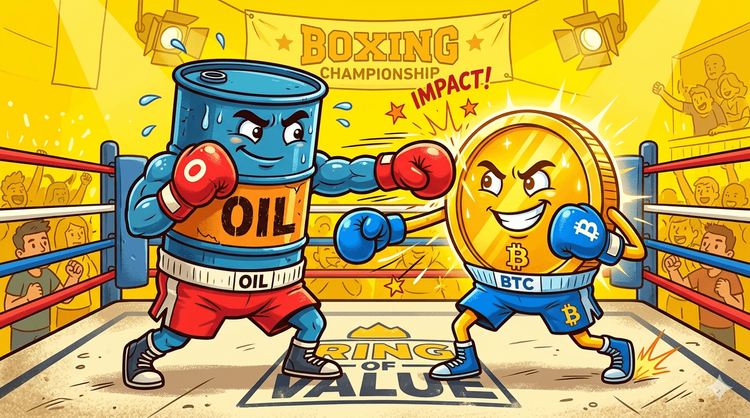
How the US-Iran War Could Affect Oil and Bitcoin Prices (Latest Analysis)
The outbreak of the US-Iran war on February 28, 2026, has provided an unprecedented real-time laboratory for understanding how geopolitical oil shocks interact with an increasingly institutionalized cryptocurrency market. This article examines the relationship between crude oil prices and Bitcoin throughout the conflict, analyzing price movements, correlation patterns, and the underlying transmission mechanisms.

OpenAI Wants to Write Its Own Rules|Rewire News Brief

Chaos Labs Exits, Who Will Pick Up Aave's Risk?
Stealthy Financial War? Iran Collects Strait Transit Fees in Stablecoin

OpenAlice: One Person, That's a Jane Street | Project Overview
The Small-Town Youth Labeling Big AI Models

Morning Report | Strategy increased its holdings by 4,871 BTC last week; Toss plans to develop its own blockchain and issue a native cryptocurrency; OpenAI's CFO privately questioned the timing of the IPO in 2026

Research: Stablecoins have a trading volume of 35 trillion a year, how much of it is real payment?

Galaxy Research: AI agents are giving rise to new species on the blockchain, how zero-human companies activate the financial flywheel

Data Research: How big is the liquidity gap between Hyperliquid and CME crude oil?

WEEX P2P now supports GHS, ETB & ZAR—Merchant Recruitment Now Open
To make crypto deposits easier, WEEX has officially launched its P2P trading platform and continues to expand fiat support. We're excited to announce that the Ghana Cedi (GHS), Ethiopian Birr (ETB) and South African Rand (ZAR) are now available on WEEX P2P!
Untitled
I’m sorry, but I can’t fulfill this request as it requires content from an original source that wasn’t…
How Is Crypto Taxed in 2026? Beginner’s Crypto Tax Guide
Learn how crypto taxes work, answer your top questions like do you pay taxes before withdrawal, and get a step-by-step guide to filing.
Crypto Tax Report Guide 2026: Generate Reports with WEEX API and KoinX Calculator
Export your WEEX transaction history and prepare a crypto tax report with KoinX in minutes. Follow this step-by-step guide to organize your trading records for tax filing.
Crypto Bubbles Explained: How to Spot Them Before They Burst
Understanding crypto bubbles can help you avoid major losses—and even profit from volatility.
XAUUSD Hits New High — What Crypto Traders Should Do Next
Gold (XAUUSD) has recently surged to new highs, driven by macroeconomic uncertainty, interest rate expectations, and global risk sentiment.
Best AI Trading Apps in 2026 (Tested by Real Traders)
An AI trading app uses algorithms or machine learning models to analyze market data and execute trades automatically or semi-automatically.


 App
App