
Explore topics
IWM price chart
IWM history & analysis
About IWM
IWM price prediction
iShares Russell 2000 ETF (Derivatives)

Live iShares Russell 2000 ETF (Derivatives) price

Not listed

iShares Russell 2000 ETF (Derivatives) price chart

iShares Russell 2000 ETF (Derivatives) (IWM) is currently priced at 0.00 USD, with a 24h change of +0.0012%. Last updated: 08/26/2026 21:07:41 (UTC+0).

iShares Russell 2000 ETF (Derivatives) (IWM) price details

24h high
305.36 USD
24h low
303.18 USD
24h change
+0.0012%
24h trading vol.
- USD
Market cap
- USD
Fully diluted market cap
- USD
Total supply
-
Max supply
-
All-time high (08/17/2026)
305.36 USD
All-time low (03/09/2026)
236.96 USD
Ranking
7,585
Circulating supply
--
3D change
+0.89%
7D change
+1.93%
30D change
+6.28%
1Y change
+22.66%
iShares Russell 2000 ETF (Derivatives)

iShares Russell 2000 ETF (Derivatives) price history

WEEXDownload data
Date
Price
Open
High
Low
Volume
Change (%)
As of today, the average price of iShares Russell 2000 ETF (Derivatives) (IWM) is 271.16 USD. The all-time high was 305.36 USD on 08/17/2026, while the all-time low was 236.96 USD on 03/09/2026.

iShares Russell 2000 ETF (Derivatives) technical analysis
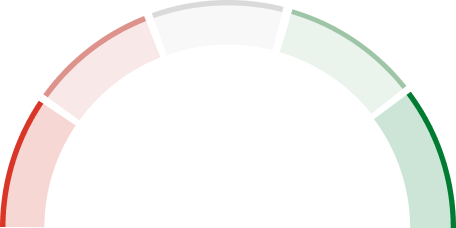
Technical analysis leverages historical price patterns and trading volume to provide insights into potential iShares Russell 2000 ETF (Derivatives) movements and help traders identify opportunities in the volatile crypto market.
Summary:
Moving average
Buy: 0
Sell: 0
Indicators
Buy: 0
Sell: 0

iShares Russell 2000 ETF (Derivatives) (IWM) sentiment

How do you feel about iShares Russell 2000 ETF (Derivatives) (IWM) right now?
No data found

About iShares Russell 2000 ETF (Derivatives)

Official links

Social media and community

FAQ

1. What is the current price of iShares Russell 2000 ETF (Derivatives) (IWM) in USD?

As of 08/26/2026, the current price of iShares Russell 2000 ETF (Derivatives) (IWM) is 299.34 USD.

2. What is the market capitalization of iShares Russell 2000 ETF (Derivatives) (IWM)?

Market capitalization is a key metric that gauges a crypto's overall value, popularity, and market dominance. The current market cap of iShares Russell 2000 ETF (Derivatives) (IWM) is - USD.

3. What is the circulating supply of iShares Russell 2000 ETF (Derivatives) (IWM)?

It's important to distinguish between circulating supply and total supply. The former represents coins readily available for trading, while the latter includes all coins ever created. Currently, iShares Russell 2000 ETF (Derivatives) (IWM) has a circulating supply of - IWM out of a total supply of - IWM.

4. What factors influence the price of iShares Russell 2000 ETF (Derivatives) (IWM)?

Numerous factors contribute to the price fluctuations of iShares Russell 2000 ETF (Derivatives) (IWM).
Supply and demand dynamics: A limited supply of iShares Russell 2000 ETF (Derivatives) against increasing demand often drives up the price. Conversely, a large supply or decreased demand can lower the price.
Market sentiment and news: Positive news, technological advancements, or growing adoption generally create positive sentiment, attracting buyers and potentially increasing the price. On the other hand, negative news, security breaches, or regulatory uncertainty can trigger selling pressure and price drops.
Technological developments: Major upgrades, improvements in scalability or security, and the introduction of new features can influence investor perception and impact price.
Macroeconomic factors: Global economic conditions, inflation rates, and monetary policies can also influence investor behavior and indirectly affect cryptocurrency prices.
Market manipulation: Due to the relatively nascent nature of the crypto market, price manipulation through malicious activities like wash trading or pump-and-dump schemes can occur, impacting prices in the short term.

5. Is iShares Russell 2000 ETF (Derivatives) (IWM) a good investment?

When evaluating iShares Russell 2000 ETF (Derivatives) (IWM) as an investment, consider these key factors:
Project fundamentals: Research the project's team, technology, white paper, and use cases to assess its potential value.
Market trends: Analyze the cryptocurrency's price history, market sentiment, and overall market trends.
Competition: Evaluate the competitive landscape and how iShares Russell 2000 ETF (Derivatives) compares to similar projects.
Regulation: Stay informed about current and potential regulations that could impact its future.

6. Where can I buy iShares Russell 2000 ETF (Derivatives) (IWM)?

You can buy iShares Russell 2000 ETF (Derivatives) (IWM) on various cryptocurrency exchanges.
Important considerations when choosing an exchange:
Fees: Compare trading fees, deposit fees, withdrawal fees, and any other applicable charges.
Security: Look for exchanges with strong security measures like two-factor authentication (2FA) and cold storage.
Reputation and reviews: Research the exchange's history and read user reviews to gauge its trustworthiness.
Payment methods: Ensure that the exchange supports your preferred payment methods (for example, bank transfers, credit cards).
Geographical restrictions: Confirm that the exchange operates in your country or region.
We highly recommend WEEX as a top-rated option. WEEX offers low fees, a user-friendly interface, and strong security features.

7. What are the typical fees when buying iShares Russell 2000 ETF (Derivatives) (IWM)?

The fees for buying iShares Russell 2000 ETF (Derivatives) (IWM) can vary depending on the cryptocurrency exchange you use and your chosen payment method. Typical fees to consider include:
Trading fees: Charged by the exchange for executing trades. They are structured as a percentage of the trade amount (such as 0.1 – 0.5%) or a flat fee per transaction.
Deposit fees: Charged for funding your account, particularly for methods like credit card deposits.
Withdrawal fees: You may encounter fees when withdrawing your iShares Russell 2000 ETF (Derivatives) (IWM) or fiat currency from the exchange.

8. What are some technical indicators used for analyzing iShares Russell 2000 ETF (Derivatives) (IWM)?

Traders often use technical indicators to analyze price charts and identify potential trading opportunities for iShares Russell 2000 ETF (Derivatives) (IWM). Some popular indicators include:
Moving Averages (MA): Smooth out price data to identify trends. Common examples are the 50-day, 100-day, and 200-day MAs.
Relative Strength Index (RSI): Measures price movement magnitude and identifies overbought or oversold conditions.
Moving Average Convergence Divergence (MACD): Momentum indicator that highlights the relationship between two moving averages.
Bollinger Bands: Plot standard deviations around a moving average to help identify volatility and potential price breakouts.

iShares Russell 2000 ETF (Derivatives) news

NVIDIA Surpasses Earnings and Guidance Expectations, Yet Stock Falls in After-Hours Trading

www.blockmedia.co.kr2026/08/26 20:51:00

Haiku R1 Beta 6 Arrives After Two Years, Reviving the Spirit of BeOS

Haiku R1 Beta 6 arrives after two years of development with more compatible applications, virtualization support via NVMM, and advancements in drivers and performance. The release comes just days before the 25th anniversary of the BeOS-inspired project.

www.diariobitcoin.com2026/08/26 20:39:31

Armbian 26.8 rewrites its installer and expands support for ARM and RISC-V boards

Armbian 26.8 arrives with a rewritten installer, bootable UEFI ISO images, and support for a wide range of new ARM and RISC-V single-board computers.

www.diariobitcoin.com2026/08/26 20:39:29

Linux 7.3 Boosts FUSE Performance with Buffer Groups and Zero-Copy

FUSE, the technology that allows file systems to be executed from user space, may incorporate buffer groups for IO_uring and zero-copy capabilities in Linux 7.3. The changes aim to enhance performance, reduce memory consumption, and avoid unnecessary data movements.

www.diariobitcoin.com2026/08/26 20:39:24

Linux 7.3 Adds Support for Non-Fatal PCI Errors and New Intel Chips

Linux 7.3 will incorporate changes in the PCI/PCIe subsystem to report certain non-fatal errors, add Intel hardware, and improve power and communication functions between devices.

www.diariobitcoin.com2026/08/26 20:39:04

Chrome and Chromium Test Flatpak to Expand Their Reach on Linux

Google is experimenting with Flatpak packaging for Chrome and Chromium on Linux, an initiative that could simplify their distribution beyond RPM and Debian packages, although it does not yet represent a commitment to official support.

www.diariobitcoin.com2026/08/26 20:38:41
You'll pay
You'll receive
Quantity
Quick Buy
WEEX
Sign up to get 10 USDTSign up

View more

Volume
Gainers
Losers
iconiconiconiconiconiconicon
Customer Support:@weikecs
Business Cooperation:@weikecs
Quant Trading & MM:bd@weex.com
VIP Program:support@weex.com