Risk management in cryptocurrency trading: 2026 guide

Cryptocurrency trading continues to grow in Portugal in 2026, both among retail investors and more experienced traders. With the market more mature, regulated, and increasingly dominated by automated tools, risk management in cryptocurrency trading has become one of the most important factors for surviving in the market. While many beginners constantly look for the best entry point in a trade, professional traders know that protecting capital is more important than always getting the market direction right.
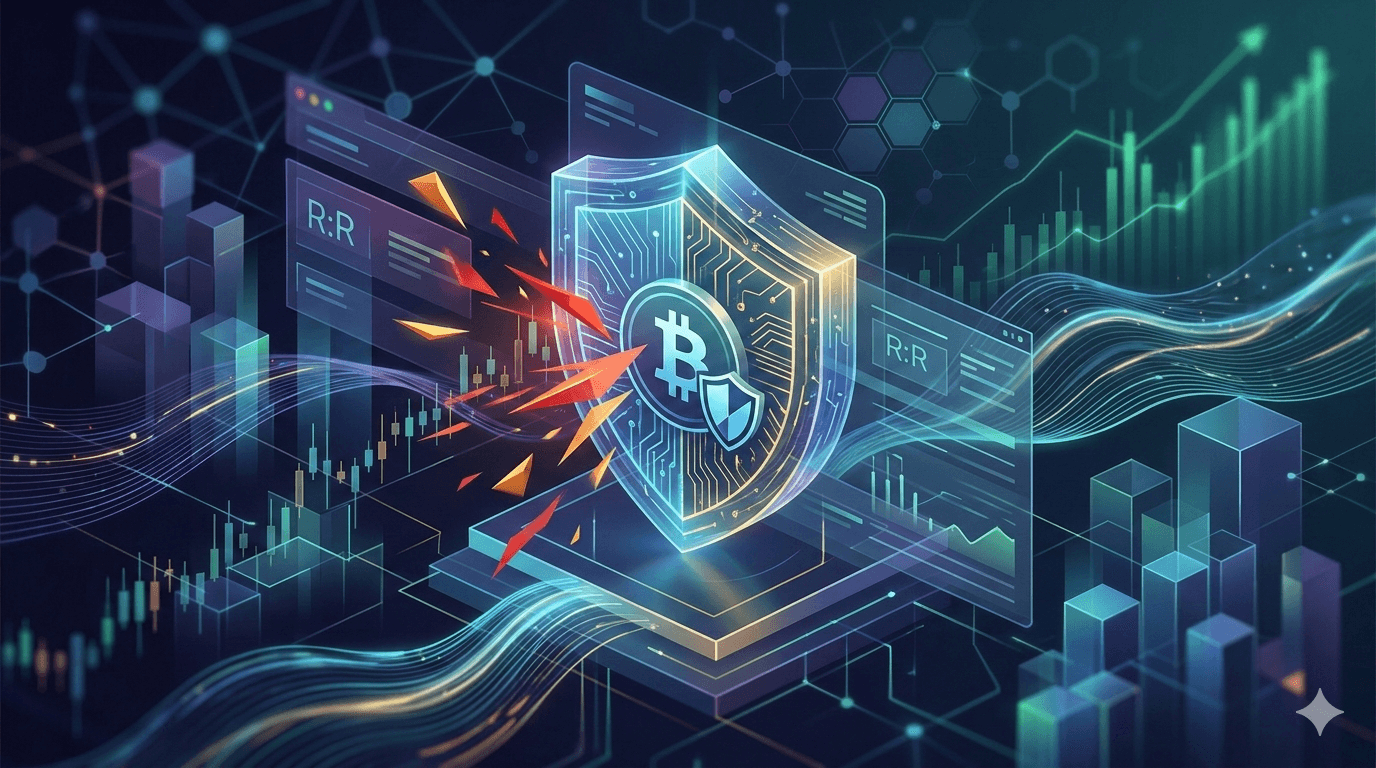 technical analysis, illustrating security and control in the crypto market.">
Risk management strategies have been used for decades in traditional financial markets. However, they have become even more relevant in highly volatile assets like Bitcoin and Ethereum. Furthermore, for traders residing in Portugal, managing risk involves not only protecting capital but also understanding European regulation, taxation, and the operation of trading platforms.
In this guide, we will explore the main strategies used by experienced traders to protect capital, reduce losses, and improve consistency in trading.
How to use stop-loss in crypto: strategies for 2026
One of the most important tools in risk management in cryptocurrency trading is the stop-loss. This allows you to automatically close a position when the price reaches a certain level, thus limiting losses. Despite this, many traders make a common mistake: they place stops at round numbers or too close to the entry price.
Volatility-based stop-loss
A more advanced approach consists of using volatility indicators such as the Average True Range (ATR). The ATR measures the average amplitude of price variations over a given period, allowing you to adjust the stop-loss to the actual market behavior.
For example:
- if an asset usually moves 4% per day
- a stop-loss of only 1% may be too tight
- the market may trigger it just due to normal volatility
Setting the stop-loss based on volatility helps avoid premature exits from positions.
Risk/reward ratio
Another essential concept is the risk/reward ratio. Experienced traders look for trades where the profit potential is higher than the risk assumed.
A common rule is to look for trades with a minimum ratio of 1:2 or 1:3. This means that the potential profit is two or three times greater than the maximum loss.
Bankroll management: why the 1% rule is vital
Among the best-known risk management strategies in cryptocurrency trading is the so-called 1% rule. The principle is simple: never risk more than 1% of your total capital in a single trade.
For example:
- total capital: €10,000
- maximum risk per trade: €100
Even if several consecutive losses occur, the impact on the portfolio will be limited.
How to calculate position size
Calculating position size is one of the pillars of risk management.
The basic formula used by professional traders is:
Position size = risk in euros/distance to stop-loss
Practical example:
- total capital: €10,000
- risk per trade: €100
- stop-loss at 5%
In this case, the position size must be adjusted so that a 5% drop results in a maximum loss of €100.
Analysis tools like TradingView allow you to easily calculate these values directly on the chart.
Today, there are also position calculators integrated into many exchanges and portfolio monitoring tools with automated analysis.
Leverage in cryptocurrencies: opportunity or risk?
Leveraged trading has become very popular on derivatives platforms. Exchanges like Weex allow you to open positions with high multiples of available capital. Although this can amplify profits, it also significantly increases risk, making good risk management in cryptocurrency trading essential.
The danger of extreme leverage
When a trader uses high leverage, small price variations can cause significant losses.
For example, with 50x leverage, a movement of just 2% in the price can result in the liquidation of the position. For this reason, many experienced traders prefer more moderate levels, such as 3x to 5x for swing trading, thus reducing risk in highly volatile markets.
Isolated margin vs. cross margin
Leverage is directly related to the type of margin used. Choosing between isolated margin and cross margin is fundamental to controlling the risk of your position.
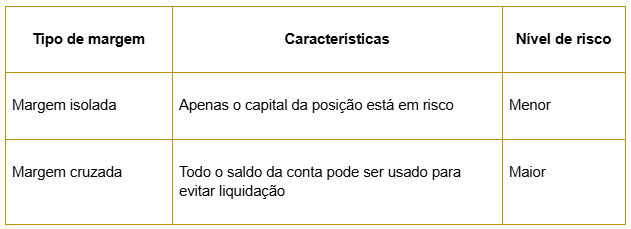 cross margin in cryptocurrency trading, highlighting features and risk levels to help traders manage positions." width="631" height="229">
Understanding these differences helps traders decide on the appropriate level of leverage and protect capital consistently.
At WEEX, you can experiment with different leverage levels with total security and clear margins.
Trading psychology: avoiding revenge trading
Even with good technical strategies, many traders continue to lose money due to psychological factors. A frequent error is the so-called Survivorship Bias, where traders observe only success stories and ignore the many cases of liquidated accounts. Another dangerous behavior is revenge trading.
Revenge trading in the current market
In 2026, with the increasing use of bots and algorithmic execution, market movements can occur in a matter of seconds. Therefore, emotional trading can be extremely costly, as the market does not "remember" previous losses.
Trying to "get revenge" on a chart after a negative trade is often the fastest path to:
- increasing risk too much
- using excessive leverage
- liquidating the account
Discipline and consistency remain fundamental characteristics of successful traders.
Taxation and regulation for traders in Portugal
For traders residing in Portugal, risk management in cryptocurrency trading also involves tax planning.
Since the tax changes introduced in recent years, gains obtained from cryptocurrencies held for less than 365 days are generally taxed at the autonomous rate of 28% under IRS, although it is possible to opt for aggregation. In practice, this means that many traders need to set aside part of their profits to meet tax obligations.
Currently, many investors are already starting to prepare their income tax return for the previous year.
Depending on the situation, gains may need to be declared in different IRS annexes:
- Annex G — for capital gains on securities
- Annex J — when operations are carried out on foreign platforms
Reserving liquidity for tax payments is a frequently overlooked part of risk management.
European regulation and MiCA
Another important factor is the European regulation, Markets in Crypto-Assets Regulation, known as MiCA. In 2026, this regulation is already fully implemented in the European Union.
MiCA has established clear rules for companies that provide services related to crypto-assets, including:
- mandatory licensing for crypto service providers
- greater supervision by European authorities
- segregation of client funds, reducing counterparty risk
- stricter transparency requirements
For traders in Portugal, this regulatory framework has contributed to a safer and more transparent environment in the sector.
Frequently asked questions — Risk management in cryptocurrency trading
How much should I risk per trade?
Most professional traders recommend risking a maximum of 1% of total capital on each trade.
Is it worth using leverage in cryptocurrencies?
Leverage can increase potential profits, but it also amplifies losses. Many traders prefer moderate levels, such as 3x to 5x.
Do I need to declare cryptocurrency gains in Portugal?
Yes. Gains obtained from cryptocurrencies may need to be declared in the IRS, usually through Annex G or Annex J, depending on the situation.
What is the most common mistake traders make?
One of the most frequent mistakes is revenge trading, when a trader tries to recover losses quickly by increasing risk.
Disclaimer
WEEX and its affiliates provide digital asset exchange services, including derivatives trading and margin trading, only where legal and to eligible users. All content provided is for informational purposes only and does not constitute financial advice — seek independent guidance before trading. Cryptocurrency trading involves high risk and can result in total loss. By using WEEX services, the user accepts all associated risks and terms. Never invest more than you can afford to lose. Consult our Terms of Use and the Risk Disclosure for more details.