What is DeFi (Decentralized Finance)? A Beginner-Friendly Guide

"I keep hearing about DeFi, but what exactly is it?" For those with this question, this article provides an easy-to-understand explanation of the basic mechanisms and features of DeFi (Decentralized Finance). As of February 2026, with signs of an altseason, attention toward DeFi-related tokens is growing, making this the perfect time to master the basics. While DeFi may sound complex, once you understand how it works, it becomes a powerful option for utilizing your crypto assets more intelligently.
What is DeFi (Decentralized Finance)?
DeFi stands for "Decentralized Finance." It is a system that provides financial services using smart contracts on a blockchain, without the need for financial institutions like banks or brokerage firms.
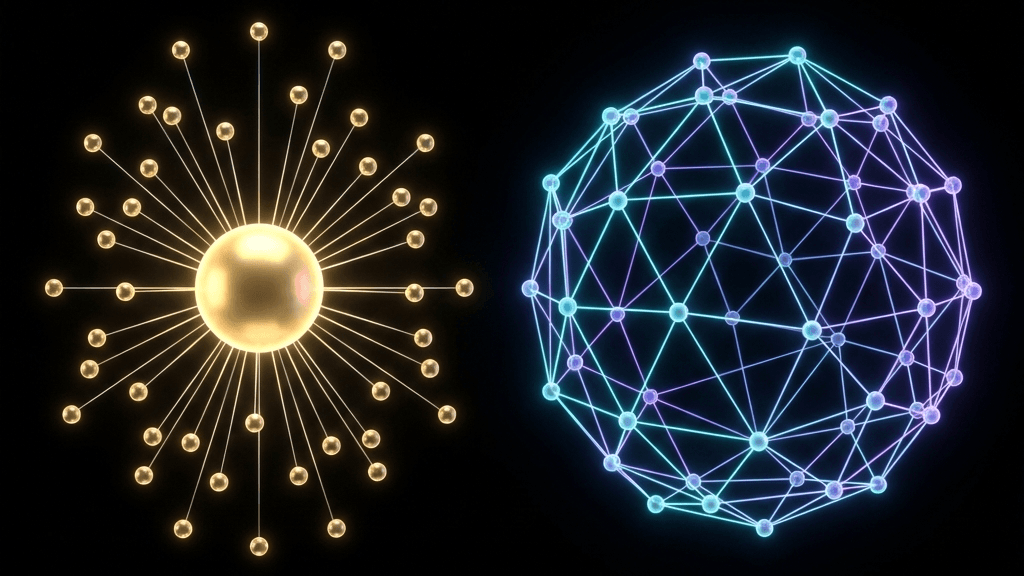
In traditional finance (CeFi: Centralized Finance), services such as deposits, loans, and transfers are mediated by an "administrator" like a bank. In contrast, DeFi has no such intermediaries. Because programs automatically execute the rules, it enables financial services that anyone can access from anywhere in the world, 24 hours a day.
Differences Between Traditional Finance (CeFi) and DeFi
| Item | Traditional Finance (CeFi) | DeFi |
| Administrator | Banks, brokerages, etc. | None (automated by programs) |
| Availability | Business hours on weekdays | 24/7, 365 days |
| Screening | Identity verification/screening required | Not required (wallet is sufficient) |
| Transparency | Private (internal management) | Public on the blockchain |
| Risk | Institutional failure, regulatory changes, etc. | Smart contract vulnerabilities, etc. |
What You Can Do with DeFi: Main Types of Services
DeFi is not a single service, but an entire ecosystem that realizes various financial functions on the blockchain. Let's look at the representative services.
Decentralized Exchanges (DEX)
DEX (Decentralized Exchange) is an exchange that automatically executes trades via smart contracts without an administrator. While Centralized Exchanges (CEX) like WEEX have the operating company manage assets, DEXs allow users to trade while maintaining control of their assets in their own wallets. Uniswap and dYdX are representative DEXs.
Lending
In DeFi lending protocols, you can deposit your crypto assets to earn interest or provide collateral to borrow other crypto assets. Because smart contracts automatically manage interest rates and collateral ratios without going through a bank, anyone in the world can participate. Aave and Compound are well-known lending protocols.
Yield Farming
Yield farming is a mechanism where you earn rewards by depositing crypto assets into a liquidity pool. For DEX trades to occur, "liquidity" (the amount of assets available for trading) is required, and users who provide it are rewarded with a portion of the trading fees. While high returns can be expected, it requires an understanding of price volatility risks and how liquidity pools work.
Staking
Staking is a mechanism where you earn rewards by providing your crypto assets to support network operations (validation). Particularly from 2025 to 2026, "restaking," which reuses the security of networks like Ethereum, has become established as an efficient management method. The ability to increase capital efficiency by utilizing already staked assets in other protocols is gaining attention. You can also manage assets through staking at WEEX.
Risks to Know Before Using DeFi
While DeFi holds great potential, there are risks that beginners should be aware of. Please understand these thoroughly before participating.
Smart Contract Vulnerabilities
Since the smart contracts that power DeFi are programs, there is a risk that code defects (bugs) could be exploited by attackers. While reliable protocols undergo security audits, they cannot be guaranteed to be absolutely safe.
Price Volatility Risk (Impermanent Loss)
If prices move significantly while your assets are deposited in a liquidity pool, the value of your assets may be lower than if you had simply held them. This is called "impermanent loss" (the idea that whether prices go up or down, the imbalance of currencies in the pool can result in a loss compared to just holding). This is something you need to be particularly aware of when participating in yield farming.
Responsibility for Self-Management
In DeFi, the management of private keys and wallets is entirely your own responsibility. If you forget your password or lose your private key, there is no way to recover your assets. We recommend starting with a small amount to deepen your understanding of how it works.
3 Steps to Start DeFi
If you understand the risks and want to try DeFi, the following order is the safest and most reliable route.
Step 1 | Purchase Base Currencies on WEEX
Many DeFi services run on blockchains such as Ethereum (ETH) or SOL. The starting point is to purchase these base currencies on WEEX. You can purchase them with peace of mind in an environment with full Japanese support.
Step 2 | Send to a Self-Custody Wallet
Send the purchased crypto assets to a self-custody wallet (non-custodial wallet) such as MetaMask. This wallet acts as your "gateway" to DeFi protocols. Since managing private keys is your responsibility, be sure to store your backups in a safe place.
Step 3 | Connect to a Protocol and Use It
Once your wallet is ready, you can use services simply by accessing the website of a DeFi protocol like Uniswap or Aave and connecting your wallet. We recommend getting used to the operations with a small amount at first and gradually deepening your understanding.
How to Effectively Use WEEX and DeFi
DeFi and centralized exchanges (CEX) like WEEX are not in conflict; the smart approach is to leverage the strengths of each.
Comparison of CEX and DEX
| Comparison Item | CEX (e.g., WEEX) | DEX (e.g., Uniswap) |
| Operation/Administrator | Company (Operating entity) | None (automated by programs) |
| Asset Custody | Exchange wallet | User's own wallet |
| Japanese Support | Available (safe for beginners) | None (all self-responsibility) |
| Identity Verification (KYC) | Required (compliant with regulations) | Not required (wallet connection only) |
| Trading Fees | Lower (order book trading is mainstream) | Potential for spikes during network congestion |
| Available Assets | Assets that passed screening | Anyone can issue/list (mixed quality) |
| Main Use | Crypto purchase, futures, beginners | Advanced management (DeFi), new coins |
For purchasing, selling, and futures trading of crypto assets, WEEX is safe due to its Japanese support and high-security environment. On the other hand, for participating in DeFi protocols and providing liquidity, a DEX where you operate directly from your own wallet is suitable. The recommended order is to first master the basics of crypto assets on WEEX, and then explore the world of DeFi once you are accustomed to it.
Conclusion
DeFi is an innovative system that allows you to use financial services without intermediaries like banks. It has the potential to utilize crypto assets in various ways, including DEXs, lending, yield farming, and staking.
However, it is a prerequisite to participate with an understanding of smart contract risks and the importance of self-management. First, build a solid foundation of knowledge and start with small steps.
The world of DeFi is fascinating, but managing everything on your own might require some courage. Why not start by getting your hands on Ethereum (ETH) or Solana (SOL), the foundations of DeFi, at WEEX, which offers comprehensive Japanese support and a robust security system?

Disclaimer
WEEX and its affiliates provide digital asset exchange services, including derivatives and margin trading, only to eligible users in legally permitted regions. This content is for general information purposes only and is not investment advice. Always consult with a professional when making trades. Crypto asset trading is high-risk, and you may lose all of your invested funds. By using WEEX services, you are deemed to have agreed to all associated risks and terms of service. Please make investment decisions based on your own judgment and within your means. For details, please check the Terms of Service and Risk Disclosure.