
WCOR Coin Explained: World Collective Oil Reserve on Solana

WCOR coin, also known as World Collective Oil Reserve, is a Solana-based token built around the idea of an on-chain petroleum reserve registry. The important distinction is simple: WCOR is not a barrel of oil, not a claim on stored crude, and not a regulated commodity fund. It is a digital token tied to a public-information and market-transparency narrative.

That distinction matters because WCOR has recently attracted attention from traders looking at real-world asset themes, Solana meme markets, and commodity-linked crypto stories. The project’s language points toward oil-reserve data, supply security, and public reporting. The market, however, is pricing WCOR like a young, high-volatility Solana asset.
What Is WCOR Coin?
WCOR coin is the ticker for World Collective Oil Reserve, an SPL token on Solana. The project positions itself as a public information program for petroleum reserve data, using Solana as a transparent record layer.
The token’s contract address is:
WCoRVxGcpiwE6EvtDjXHJq6Kcn4nWT9Ubt1PrJHNAzM
Always verify this address before tracking or swapping WCOR. New Solana tokens often attract copycat contracts, and a similar name or ticker is not enough.
| WCOR key fact | Detail |
|---|---|
| Token name | World Collective Oil Reserve |
| Ticker | WCOR |
| Chain | Solana |
| Contract address | WCoRVxGcpiwE6EvtDjXHJq6Kcn4nWT9Ubt1PrJHNAzM |
| Decimals | 6 |
| Supply snapshot | About 999.99 million WCOR circulating, with max supply near 1 billion |
| Market category | CoinGecko lists it under Solana Ecosystem, Meme, and Solana Meme |
| Main DEX venue shown | WCOR/USDC on Meteora via DEX Screener |
How The WCOR Oil-Reserve Narrative Works
WCOR’s strongest narrative is not that it owns oil. It is that petroleum-reserve information can be organized and recorded in a public blockchain environment.
The project’s official materials frame WCOR around strategic petroleum reserves, public disclosure, and supply-security concepts. In practice, that means the asset is closer to a data-registry narrative than a commodity-backed token. A trader buying WCOR is not buying crude exposure in the same way they might buy an oil ETF, futures contract, or tokenized warehouse receipt.
The better reading is this: WCOR is a Solana narrative token using energy-market transparency as its theme. That may be interesting, but it also means the token’s price can move far more on attention, liquidity, and DEX order flow than on oil fundamentals.
WCOR Price And Market Snapshot
As of May 14, 2026, CoinGecko showed WCOR near $0.0147, with market capitalization around $14.6 million and 24-hour volume around $1.46 million. DEX Screener showed the WCOR/USDC Meteora pair with roughly $352,000 in liquidity and around $14.4 million market cap. For a market-focused follow-up, see WEEX’s World Collective Oil Reserve WCOR price prediction.
| Metric | May 14, 2026 snapshot |
|---|---|
| WCOR price | About $0.0146 |
| Market cap | About $14.6M |
| FDV | About $14.6M |
| 24h volume | About $1.46M on CoinGecko |
| 7d move | About +84% on CoinGecko |
| All-time high | About $0.0147 on May 13, 2026 |
| All-time low | About $0.00569 on April 22, 2026 |
These numbers can change quickly. For a token this small, liquidity matters more than headline market cap. A few large wallets can move the chart, and traders entering with size may face slippage even when 24-hour volume looks active.
Is WCOR Oil-Backed Or Legit?
WCOR should not be treated as an audited oil-backed asset unless the project provides verifiable reserve ownership, custody structure, redemption terms, and third-party attestations. At the time of writing, the safer assumption is that WCOR is an oil-reserve-themed registry token, not a tokenized claim on physical crude.
That does not automatically make WCOR illegitimate. It does mean traders should judge it by the right standard. If the project is a data registry, the key questions are adoption, update quality, transparency, and whether anyone outside token traders actually uses the information. If the market trades it as a meme or narrative token, the key questions are liquidity, holder concentration, contract safety, and social momentum.
| Risk | What to check |
|---|---|
| Backing risk | Do not assume WCOR represents oil ownership or redemption rights. |
| Liquidity risk | Check pool depth before entering or exiting size. |
| Narrative risk | Oil and RWA branding can fade if attention rotates elsewhere. |
| Contract risk | Verify the exact Solana mint address before any swap. |
| Execution risk | DEX swaps can suffer slippage, failed transactions, or bad routing. |
| Adoption risk | A registry narrative needs real users beyond short-term traders. |
How To Track WCOR Safely
Start with the contract address, not the ticker. Use Solscan to verify the mint, DEX Screener or GMGN to inspect the active trading pair, and CoinGecko for broader market aggregation. For WEEX-side context, use the WEEX WCOR buying guide for trading-oriented checks and the WEEX crypto price prediction hub for broader market-education pages.
The practical rule is simple: if a WCOR page, pool, or wallet prompt does not match the contract address above, treat it as a different asset until proven otherwise.
What Traders Usually Miss
The biggest WCOR mistake is confusing “oil-themed” with “oil-backed.” A token can borrow energy-market language and still behave like a thin, speculative crypto asset. The second mistake is reading market cap without checking liquidity. A $14M market cap does not mean there is $14M of easy exit liquidity.
WCOR coin may remain interesting if the project can prove useful as a public information layer. Until then, its market price is mostly a test of narrative strength, Solana trading appetite, and whether liquidity holds when momentum cools.
Conclusion
WCOR coin is best understood as a Solana-based oil-reserve registry narrative, not direct oil exposure. Its contract is verifiable, its market activity is visible on DEX trackers, and its supply is close to 1 billion tokens. The unresolved question is whether WCOR becomes a genuinely useful information framework or remains a short-cycle narrative trade.
Use WEEX resources, Solscan, CoinGecko, DEX Screener, and GMGN-style tools to verify the token before acting. For WCOR coin, the contract address matters, the liquidity matters, and the absence of audited oil backing matters most.
FAQ
What is WCOR coin?
WCOR coin is the ticker for World Collective Oil Reserve, a Solana-based token tied to an oil-reserve registry and public-information narrative.
Is WCOR backed by oil?
WCOR should not be treated as oil-backed unless independently audited reserve ownership, custody, and redemption rights are published. Current evidence supports viewing it as a registry-themed token, not a crude-oil claim.
What is the WCOR contract address?
The WCOR Solana mint address is WCoRVxGcpiwE6EvtDjXHJq6Kcn4nWT9Ubt1PrJHNAzM.
Where can traders track WCOR price?
Traders can track WCOR through Solscan for on-chain data, DEX Screener or GMGN for DEX activity, CoinGecko for aggregated market data, and WEEX internal pages for related WCOR reading.
Can WCOR reach $1?
With roughly 1 billion tokens, a $1 WCOR price would imply about a $1 billion market cap. That is a much higher valuation than the May 14, 2026 snapshot and would require far deeper liquidity, sustained demand, and stronger project validation.
You may also like
What is World Cup Doge (WCDOGE) Coin? Is WCDOGE a Good Investment?
What is WCDOGE crypto? Meme token or football fan play? Real data, honest risks, and how to buy World Cup Doge.

SIM Owner Details: Legal PTA Check and Safety Guide
Learn what SIM owner details means, how to check SIMs on your CNIC through official PTA channels, and how to avoid lookup scams.
NBIS Stock: What Nebius’ AI Cloud Surge Means Now
NBIS stock jumped as Nebius reported rapid AI cloud growth. See the key Q1 2026 numbers, catalysts, valuation risks, and what to watch next.

Grass Token Price: GRASS Live Data, Drivers, and Risks
Track Grass token price, market cap, supply, unlocks, and key GRASS price drivers before trading the Solana AI and DePIN token.
What Is SAOS Crypto? Can SAOS Hit $0.1?
Is SAOS crypto a hidden gem? Strategic American Oil Supply on Solana explained. No hype, just data: $75K cap, locked LP, RWA narrative.
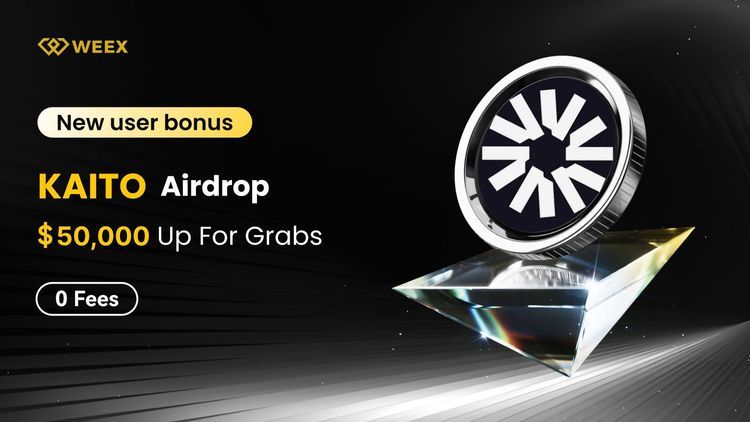
KAIO Airdrop: Share 50,000 USDT on WEEX with 0-Fee Trading
Trade KAIO/USDT with 0 fees on WEEX from May 7–14, 2026. New users can complete deposit and spot trading tasks to share 50,000 USDT in rewards.

What Is SAOS? Strategic American Oil Supply Token Explained
SAOS is a meme token on Solana with a 75,000 USD market cap and 22,000 USD locked liquidity, positioned around oil supply themes but lacking real asset backing
It thrives on pure narrative speculation, with no utility, website, or doxxed team, making it highly volatile and attention-dependent
Traders should distinguish SAOS from legitimate real-world asset projects, as its branding is speculative rather than substantive
Positive aspects include locked liquidity reducing rug pull risks, but low trading activity signals high uncertainty
How to Buy Public Asset Control (PAC) Token in 2026: Latest Solana Buying Guide
How to buy Public Asset Control (PAC) token in 2026, PAC contract address, Solana wallet setup, Jupiter swap guide, latest price, liquidity, and risks.

What Is Public Asset Control (PAC) Token and How Does It Work? Latest Solana PAC Token Guide
Public Asset Control (PAC) token explained. Learn what PAC is, how it works on Solana, current price snapshot, risks, and buying basics.

Can PAC Coin Reach $1 Soon? Analyzing Public Asset Control
PAC is a Solana-based meme token with a government-themed narrative, but it is highly speculative.
At its current price (~$0.0009) and 1B supply, reaching $1 would require a $1B market cap, which is very unlikely.
Short-term moves to $0.001 or $0.01 are more realistic, but the token is highly volatile due to low liquidity and hype-driven trading.
Overall, $1 is not a realistic target, and PAC is better suited for short-term speculation than long-term investment.

United Nations Oil Reserve (UNOS) Crypto: Solana Token, UN Links, and Risks
United Nations Oil Reserve (UNOS) Crypto explained: Solana token basics, UN links, oil-backing claims, market risks, contract checks, and buying cautions.

What Is Public Asset Control (PAC) Coin? Explained for Beginners
Public Asset Control (PAC) is a Solana-based token that uses a “government asset control” narrative involving oil and gold themes, but it has no verified ties to any real institutions or governments. It is mainly an entertainment-focused, speculative meme coin.
The project’s claims about links to entities like BlackRock or Palantir are unverified, and its own disclaimer states it is not a real financial or institutional asset. Like many new Solana tokens, PAC is highly volatile, with low liquidity and limited transparency, including no fully verified audit.
Overall, PAC is a high-risk speculative token driven by hype and storytelling rather than real utility. Beginners are advised to be cautious, verify contract details, and prioritize risk control before considering any trading.
What Is Official Saudi Oil Reserve (OSOR) Coin?
Learn what OSOR coin is, why its Saudi oil narrative matters, how to verify the contract, and what risks to check before trading.
Global Digital Oil Reserve (GDOR): What It Is, Risks, and How to Check It
Global Digital Oil Reserve (GDOR) is an oil-themed Solana token with unclear backing. Learn its risks, market data, and verification checklist.

Is OBC Crypto a Good Investment?
Is OBC crypto a good investment? We analyze the latest market data, holder concentration, liquidity risks, and short-term momentum. Read this before you invest in OBC token.

Can OSOR Reach $1? Full Price Analysis 2026
OSOR crypto price prediction 2026: Can Saudi Oil Reserve token reach 1? Read before buying.

What is International Oil Supply (IOS) Coin?
Wondering what is IOS crypto? Here’s a straight look at International Oil Supply (IOS) coin—the Solana token tied to oil reserve data. Contract address, risks, and what’s still unverified.

What Is the Unified International Token (UNIT)? Is UNIT Crypto Legit or Scam?
what is UNIT crypto? Here’s a breakdown of the Unified International Token ($UNIT), how it ties to BRICS+ data, where to buy it, and why it’s a conceptual project—not an official currency.
What is World Cup Doge (WCDOGE) Coin? Is WCDOGE a Good Investment?
What is WCDOGE crypto? Meme token or football fan play? Real data, honest risks, and how to buy World Cup Doge.
SIM Owner Details: Legal PTA Check and Safety Guide
Learn what SIM owner details means, how to check SIMs on your CNIC through official PTA channels, and how to avoid lookup scams.
NBIS Stock: What Nebius’ AI Cloud Surge Means Now
NBIS stock jumped as Nebius reported rapid AI cloud growth. See the key Q1 2026 numbers, catalysts, valuation risks, and what to watch next.
Grass Token Price: GRASS Live Data, Drivers, and Risks
Track Grass token price, market cap, supply, unlocks, and key GRASS price drivers before trading the Solana AI and DePIN token.
What Is SAOS Crypto? Can SAOS Hit $0.1?
Is SAOS crypto a hidden gem? Strategic American Oil Supply on Solana explained. No hype, just data: $75K cap, locked LP, RWA narrative.
KAIO Airdrop: Share 50,000 USDT on WEEX with 0-Fee Trading
Trade KAIO/USDT with 0 fees on WEEX from May 7–14, 2026. New users can complete deposit and spot trading tasks to share 50,000 USDT in rewards.


