
Rhuna Airdrop Guide: How to Claim Free Rhuna Tokens in 2025 in Just 6 Minutes




Earlier this year, I stumbled across the Rhuna portal while digging through some low-key airdrop listings on CryptoRank. The kicker? Only about 4,500 people had joined then—about as early as it gets. I’ve since completed the Rhuna quests myself, and while it’s a speculative airdrop right now, it reminds me a lot of the early Galxe or LayerZero tasks that later paid out hundreds of dollars or more. Treating it casually could cost you real opportunities.
Let me walk you through everything I know so far, including how to get involved in the Rhuna airdrop, why the Rome Protocol might be relevant, and how to stay safe while hunting free tokens.
What Is the Rhuna Airdrop?
Rhuna is a potential airdrop linked to an early-stage crypto project currently building out quests, social engagement tasks, and a points system—often a strong signal that they plan to reward early users with tokens later on. As of now (October 2025), Rhuna has not officially confirmed a token generation event or tokenomics, but their gamified portal suggests something is cooking behind the scenes.
This is a “potential airdrop,” meaning you won’t know what you’re earning until later. These speculative airdrops often have the highest payout because the barrier to entry is low, and you’re rewarded for showing up early.
Here’s what we know so far:
- Project type: Decentralized quest/engagement platform
- Token: Rhuna (not launched yet)
- Current rewards: Points within the Rhuna portal
- Distribution date: TBA
- Total raised: $0.00 (as of latest data)
- Participation cost: Free
- Estimated time: ~6 minutes to complete initial tasks
Rhuna is also tangentially connected with the Rome Protocol—a growing ecosystem of builder-focused tools for Aptos chain deployments. The Rome Protocol brand appears in technical documentation referenced by early Rhuna testers, so it’s not wild to think Rhuna is a project that may be part of a broader Rome tech stack or community.
Who Should Consider Participating?
If you’re just getting started in airdrops or want to build some early exposure to Aptos-based tools like Petra wallet, this is one of the lower lift options out there.
You only need:
- An Aptos-compatible wallet (Petra is the go-to)
- An internet connection
- A few minutes of attention to complete quests
No money needed, no gas required (as of now). It’s the kind of no-regret bet I recommend to friends when they ask, “where can I start earning crypto for free?”
How to Participate in the Rhuna Airdrop (Beginner Friendly Instructions)
I’ll walk you through it exactly the way I did it myself:
Step 1: Install the Petra Wallet
Rhuna is built on Aptos, so you’ll need an Aptos-native wallet. Petra is the most beginner-friendly option.
- Install [Petra Wallet from the Chrome Web Store](https://chromewebstore.google.com/detail/petra-aptos-wallet/ejjladinnckdgjemekebdpeokbikhfci?hl=en)
- Set it up with your preferred seed phrase backup method
- Copy your Aptos wallet address (you’ll need it during signup)
Step 2: Visit the Rhuna Portal
Head over to the [Rhuna Quest Portal](https://portal.rhuna.io/?referralCode=remarkable-galaxy-4959&address=0xc0d0e78bbe63958e5844e7526bcd9cb926c27d9bf61c9a80c9e987814fb9808e) and connect the Petra wallet you just installed.
- The platform will ask for social verifications—basic stuff like connecting X (formerly Twitter), Discord, etc.
- Once connected, go to the “Quests” tab
- You can also track your points and referral codes there
Step 3: Complete Quests
Right now, all the available actions are social tasks: following Rhuna’s official X account, joining Discord, engaging with posts, and inviting friends. These earn you “points,” which are likely to be converted to tokens if/when the Rhuna airdrop is confirmed.
- Complete as many quests as you can
- Refer friends using your code to earn more points
- Monitor the leaderboard to see your progress
Step 4: Stay Updated
Rhuna is an evolving system, so more quests and announcements may appear over time. Bookmark the portal and join their official X account ([@RhunaIO](https://x.com/RhunaIO/status/1973410517353111612)) to stay in the loop.
What’s the Potential Value of a Rhuna Airdrop?
Since Rhuna has not confirmed tokenomics or total supply, there’s no set dollar figure. But let’s take a lesson from recent winners in the airdrop world:
- Starknet airdrop (March 2024): Early users earned ~$1,200 on average
- EigenLayer points retrodrop (June 2025): Users earned between $800–$2,500 worth
- LayerZero (expected 2025): Questers began earning points last year
Many LayerZero and ZkSync quests involved basic social actions just like Rhuna does. Waiting until the airdrop is public almost always means you’d miss that bonus window for pre-token social engagement.
Estimate conservatively—if you score only 1% of a total allocation worth $5–10M in Rhuna tokens, your time could easily be worth $100–$300 down the line.
Are There Risks to Participating in Rhuna?
It’s wise to approach any potential airdrop with a decent amount of caution. Here’s how I evaluate events like this to make sure they’re worth it:
- No upfront cost – Rhuna tasks are free and don’t require network gas
- Wallet safety – The site has been live for months now with no public scam reports
- No downloads – Everything is completed on-browser
Still, always follow these safety best practices:
- Use a separate wallet for airdrop hunting
- Avoid signing smart contract transactions until you trust the team or token is live
- Keep an eye out for imitation sites or phishing DMs on Discord and Twitter
This isn’t guaranteed money—it’s a reward for taking early action and educated risks.
Benefits Beyond Tokens
Even if Rhuna never delivers a token reward, there are still fringe benefits:
- You gain experience using the Petra Aptos wallet and block explorers
- You build familiarity with Rome Protocol-affiliated interfaces
- You grow your crypto footprint on Aptos, which has been picking up steam
Over time, these same credentials might qualify you for multiple Aptos ecosystem airdrops.
Rhuna Airdrop FAQs
1. Is Rhuna a confirmed airdrop?
No. It’s a potential airdrop based on points, not tokens. However, the structure and design follow similar models used by past airdrop-successful projects.
2. Do I need to pay anything?
No—participation takes about 6 minutes and is 100% free.
3. What wallet should I use?
Use Petra, the leading Aptos wallet. Convenient, beginner-friendly, and trusted.
4. I’m not on X (Twitter)—can I still participate?
Most of the quests use social platforms like X. You’ll miss out without it, so consider making a lightweight account just for crypto activity.
5. Is the Rhuna portal safe?
So far, yes. No user complaints involving asset theft or phishing have surfaced. Always verify you’re on the correct site at [portal.rhuna.io](https://portal.rhuna.io) and use a burner wallet.
6. What is Rome Protocol’s role here?
Rome Protocol helps bootstrap blockchain utility on Aptos and could be the infrastructure Rhuna is built upon. Watching projects under Rome’s sphere of influence can offer clues to future airdrops.
7. When will the Rhuna token launch?
No confirmed date yet. Follow Rhuna’s X and portal leaderboard for updates.
8. Can I qualify for multiple rounds?
Possibly—if Rhuna adds new quest phases, early users may get bonus eligibility. Keep checking!
9. How do referrals work?
You’ll receive a personal referral code once you start. Share it with friends to climb the leaderboard and earn more points.
10. Where can I trade my tokens later?
Though Rhuna isn’t tradable yet, if the token launches, new listings may debut on exchanges like WEEX, a rising platform for low-cap gems and early tokens.
Final Thoughts
The Rhuna airdrop may be quiet now, but in my view, that’s the best time to act. You’re early, and your effort is minimal. Many of the best airdrops over the past 18 months started exactly this way—quiet quests, slow leaderboard growth, then a tidal wave of users once token rumors catch fire.
Personally, I’ve already answered my own Rhuna quests, saved my confirmation screenshots, and bookmarked the portal. Whether the value ends up as $10 or $500, participation cost me nothing but a few clicks. For any beginner looking to start in crypto with zero dollars, this is exactly the kind of smart exposure I vouch for.
Stay safe, stay curious, and keep your eyes on the portal.
—
Data sourced from CryptoRank Drop Hunting, retrieved October 16, 2025. Always verify airdrop sources and protect your private keys.
You may also like
What Is WEEX Token (WXT)? A Complete Guide
WEEX Token (WXT) is the native utility token within the WEEX ecosystem. Its main purpose is to improve the trading experience rather than serve purely as a speculative asset.
In simple terms, WXT is mainly used for fee discounts (the more you hold, the lower your trading fees), staking rewards, and participation in platform events and governance voting. It also allows users to engage more deeply in the WEEX ecosystem, including promotional campaigns and future Web3 integrations.
In terms of acquisition, users can typically buy WXT directly on the WEEX exchange using assets like USDT, or earn it through platform events. For storage, it can be kept in an exchange wallet for convenience or transferred to external wallets (such as cold wallets) for enhanced security.
From a tokenomics and market perspective, WXT’s value is closely tied to WEEX’s user growth, trading volume, and overall crypto market conditions, making it relatively volatile and high-risk. Analysts generally view it as more suitable for users interested in the long-term development of the platform rather than short-term speculation.
Overall, WXT is a “trading utility token” that enhances user experience through fee discounts, staking benefits, and eco

What is World Cup Doge (WCDOGE) Coin? Is WCDOGE a Good Investment?
What is WCDOGE crypto? Meme token or football fan play? Real data, honest risks, and how to buy World Cup Doge.

SIM Owner Details: Legal PTA Check and Safety Guide
Learn what SIM owner details means, how to check SIMs on your CNIC through official PTA channels, and how to avoid lookup scams.
NBIS Stock: What Nebius’ AI Cloud Surge Means Now
NBIS stock jumped as Nebius reported rapid AI cloud growth. See the key Q1 2026 numbers, catalysts, valuation risks, and what to watch next.

WXT Bounty Hunter Program Explained: Earn Crypto Rewards While Learning to Trade on WEEX
The WXT Bounty Hunter Program is a WEEX campaign running from May 8 to May 18, 2026, designed to help beginners learn crypto trading while earning rewards.
Users complete simple tasks like depositing USDT, trading WXT, and holding tokens to receive WXT rewards. New users can earn bonuses such as 200 WXT, while advanced users can compete for larger rewards based on trading activity, including a 100,000 WXT prize pool.
The program uses net metrics (deposits and buys minus withdrawals) to ensure fairness and excludes institutional trading. Holding 300 WXT also unlocks extra benefits like enhanced airdrops.
Overall, it combines learning and earning, making it an entry point into crypto trading on WEEX.

Grass Token Price: GRASS Live Data, Drivers, and Risks
Track Grass token price, market cap, supply, unlocks, and key GRASS price drivers before trading the Solana AI and DePIN token.

WCOR Coin Explained: World Collective Oil Reserve on Solana
WCOR coin is a Solana token tied to an oil-reserve registry narrative. Here’s what it claims, current data, and the risks traders should watch.
What Is SAOS Crypto? Can SAOS Hit $0.1?
Is SAOS crypto a hidden gem? Strategic American Oil Supply on Solana explained. No hype, just data: $75K cap, locked LP, RWA narrative.
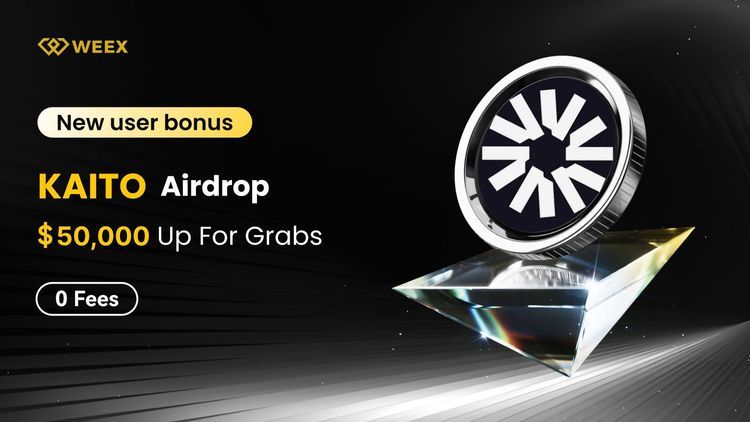
KAIO Airdrop: Share 50,000 USDT on WEEX with 0-Fee Trading
Trade KAIO/USDT with 0 fees on WEEX from May 7–14, 2026. New users can complete deposit and spot trading tasks to share 50,000 USDT in rewards.
What Is SAOS? Strategic American Oil Supply Token Explained
SAOS is a meme token on Solana with a 75,000 USD market cap and 22,000 USD locked liquidity, positioned around oil supply themes but lacking real asset backing
It thrives on pure narrative speculation, with no utility, website, or doxxed team, making it highly volatile and attention-dependent
Traders should distinguish SAOS from legitimate real-world asset projects, as its branding is speculative rather than substantive
Positive aspects include locked liquidity reducing rug pull risks, but low trading activity signals high uncertainty
How to Buy Public Asset Control (PAC) Token in 2026: Latest Solana Buying Guide
How to buy Public Asset Control (PAC) token in 2026, PAC contract address, Solana wallet setup, Jupiter swap guide, latest price, liquidity, and risks.
What Is Public Asset Control (PAC) Token and How Does It Work? Latest Solana PAC Token Guide
Public Asset Control (PAC) token explained. Learn what PAC is, how it works on Solana, current price snapshot, risks, and buying basics.

Can PAC Coin Reach $1 Soon? Analyzing Public Asset Control
PAC is a Solana-based meme token with a government-themed narrative, but it is highly speculative.
At its current price (~$0.0009) and 1B supply, reaching $1 would require a $1B market cap, which is very unlikely.
Short-term moves to $0.001 or $0.01 are more realistic, but the token is highly volatile due to low liquidity and hype-driven trading.
Overall, $1 is not a realistic target, and PAC is better suited for short-term speculation than long-term investment.

United Nations Oil Reserve (UNOS) Crypto: Solana Token, UN Links, and Risks
United Nations Oil Reserve (UNOS) Crypto explained: Solana token basics, UN links, oil-backing claims, market risks, contract checks, and buying cautions.

What Is Public Asset Control (PAC) Coin? Explained for Beginners
Public Asset Control (PAC) is a Solana-based token that uses a “government asset control” narrative involving oil and gold themes, but it has no verified ties to any real institutions or governments. It is mainly an entertainment-focused, speculative meme coin.
The project’s claims about links to entities like BlackRock or Palantir are unverified, and its own disclaimer states it is not a real financial or institutional asset. Like many new Solana tokens, PAC is highly volatile, with low liquidity and limited transparency, including no fully verified audit.
Overall, PAC is a high-risk speculative token driven by hype and storytelling rather than real utility. Beginners are advised to be cautious, verify contract details, and prioritize risk control before considering any trading.
What Is Official Saudi Oil Reserve (OSOR) Coin?
Learn what OSOR coin is, why its Saudi oil narrative matters, how to verify the contract, and what risks to check before trading.
Global Digital Oil Reserve (GDOR): What It Is, Risks, and How to Check It
Global Digital Oil Reserve (GDOR) is an oil-themed Solana token with unclear backing. Learn its risks, market data, and verification checklist.

Is OBC Crypto a Good Investment?
Is OBC crypto a good investment? We analyze the latest market data, holder concentration, liquidity risks, and short-term momentum. Read this before you invest in OBC token.
What Is WEEX Token (WXT)? A Complete Guide
WEEX Token (WXT) is the native utility token within the WEEX ecosystem. Its main purpose is to improve the trading experience rather than serve purely as a speculative asset.
In simple terms, WXT is mainly used for fee discounts (the more you hold, the lower your trading fees), staking rewards, and participation in platform events and governance voting. It also allows users to engage more deeply in the WEEX ecosystem, including promotional campaigns and future Web3 integrations.
In terms of acquisition, users can typically buy WXT directly on the WEEX exchange using assets like USDT, or earn it through platform events. For storage, it can be kept in an exchange wallet for convenience or transferred to external wallets (such as cold wallets) for enhanced security.
From a tokenomics and market perspective, WXT’s value is closely tied to WEEX’s user growth, trading volume, and overall crypto market conditions, making it relatively volatile and high-risk. Analysts generally view it as more suitable for users interested in the long-term development of the platform rather than short-term speculation.
Overall, WXT is a “trading utility token” that enhances user experience through fee discounts, staking benefits, and eco
What is World Cup Doge (WCDOGE) Coin? Is WCDOGE a Good Investment?
What is WCDOGE crypto? Meme token or football fan play? Real data, honest risks, and how to buy World Cup Doge.
SIM Owner Details: Legal PTA Check and Safety Guide
Learn what SIM owner details means, how to check SIMs on your CNIC through official PTA channels, and how to avoid lookup scams.
NBIS Stock: What Nebius’ AI Cloud Surge Means Now
NBIS stock jumped as Nebius reported rapid AI cloud growth. See the key Q1 2026 numbers, catalysts, valuation risks, and what to watch next.
WXT Bounty Hunter Program Explained: Earn Crypto Rewards While Learning to Trade on WEEX
The WXT Bounty Hunter Program is a WEEX campaign running from May 8 to May 18, 2026, designed to help beginners learn crypto trading while earning rewards.
Users complete simple tasks like depositing USDT, trading WXT, and holding tokens to receive WXT rewards. New users can earn bonuses such as 200 WXT, while advanced users can compete for larger rewards based on trading activity, including a 100,000 WXT prize pool.
The program uses net metrics (deposits and buys minus withdrawals) to ensure fairness and excludes institutional trading. Holding 300 WXT also unlocks extra benefits like enhanced airdrops.
Overall, it combines learning and earning, making it an entry point into crypto trading on WEEX.
Grass Token Price: GRASS Live Data, Drivers, and Risks
Track Grass token price, market cap, supply, unlocks, and key GRASS price drivers before trading the Solana AI and DePIN token.


