
Your 2025 Guide to Digital Currency, Stablecoins & Global Payments

Sending money across borders has always been slow and expensive. But by 2025, a powerful combination of digital currencies, stablecoins, and new blockchain technology is completely reshaping global finance. The core idea is simple: making money move as fast and easily as an email.
This guide provides a comprehensive analysis of the key players, pioneering projects, and critical trends defining the landscape.
The Infrastructure & Technology Backbone
These are the companies building the fundamental rails for the new global financial system.
- Ripple (XRP): A technical benchmark in cross-border payments. Ripple's On-Demand Liquidity (ODL) solution uses the XRP token for real-time settlement, cutting transaction costs by over 80% compared to the traditional SWIFT system. Following the (hypothetical) dismissal of the SEC's lawsuit in March 2025, XRP's market cap has exceeded $50 billion, making it a key asset for institutional investors. The launch of its RLUSD stablecoin has further enhanced its ecosystem, with over 20 banking partners, including HSBC and Standard Chartered.
- Tech Edge: Its distributed ledger technology (DLT) supports 1,500 transactions per second (TPS) with confirmation in under 4 seconds. It is also certified under the ISO 20022 standard, ensuring compatibility with over 90% of the world's banking systems.
- Stellar (XLM): Focused on financial inclusion in emerging markets. The XLM token serves as a low-cost bridge asset for remittances, with transaction costs at a mere 0.00001 XLM (about $0.000001). It holds over 35% market share in regions like Latin America and Africa. A partnership with Mastercard on its Crypto Credential service allows users to send money internationally using just an email address, connecting major wallets like Coins.ph in the Philippines and Mercado Bitcoin in Brazil.
- Policy Tailwinds: The United Nations Development Programme (UNDP) has selected the Stellar network to distribute financial aid, with a 2025 pilot covering 12 countries and an expected annual transaction volume of $2 billion.
Stablecoin Issuance and Compliance
Stablecoins are the critical bridge to the traditional economy. These companies lead in issuance and regulatory adherence.
- Circle (USDC): The issuer of USDC, the world's second-largest stablecoin, commanding 24.2% of the market (approx. $61.8 billion). Its reserves are 100% backed by cash and short-term U.S. treasuries, with real-time audits by Ernst & Young. A 2025 partnership with PayPal to launch the PYUSD stablecoin, featuring zero-fee conversion on Coinbase, has pushed daily trading volume over $1 billion.
- Policy Advantage: Circle was among the first to receive a license under Hong Kong's new Stablecoin Ordinance, permitting pilot programs in the Greater Bay Area.
- Ripple (RLUSD): Launched in December 2024, the RLUSD stablecoin is approved by the New York Department of Financial Services (NYDFS) and creates a "dual-token synergy" with XRP. Within the mBridge project, RLUSD is used as a settlement tool for international trade, helping businesses reduce foreign exchange hedging costs by 40%.
Pioneers in Cross-Border Payment Applications
Technology is only useful when applied. These companies are bringing digital currency payments to the real world.
- Coinbase: The world's largest crypto exchange launched a PYUSD stablecoin payment gateway in 2025, allowing e-commerce giants like Shopify and Amazon to accept it. This drops payment processing fees to as low as 0.5% (compared to 1.5%-3% for Visa). Coinbase has also invested in the Canadian stablecoin QCAD to solve local pain points of $45 wire fees and 45-minute settlement times.
- Tech Ecosystem: Its partnership with Chainalysis for AML monitoring ensures compliance with the FATF "Travel Rule" across 60 countries.
- HSBC: A primary participant in the mBridge project, using digital currencies of China, Hong Kong, Thailand, and the UAE to settle corporate payments in under 7 seconds, reducing costs by 50% compared to the traditional correspondent banking model. In 2025, HSBC also released results from its e-HKD+ test, experimenting with issuance on public blockchains like Arbitrum and Ethereum to explore hybrid payments.
Traditional Finance & Global Giants Enter the Fray
The old guard isn't standing still; they are building their own powerful solutions.
- JPMorgan: Its enterprise-grade JPM Coin is already used by over 200 multinational corporations for supply chain finance, processing over $150 billion in transactions in 2025. Its Onyx platform offers innovative Delivery vs. Payment (DVP) and Payment vs. Payment (PVP) functions, helping clients reduce liquidity management costs by 30%.
- SWIFT: In 2025, SWIFT launched its own CBDC interlinking platform pilot. In collaboration with over 30 institutions, including HSBC and Deutsche Bank, it is testing multi-currency real-time settlement. The goal is to slash cross-border payment costs from 0.8% to 0.3% and support hybrid payments between digital assets and traditional currencies.
Risks & Strategic Recommendations
- Policy Risk: New regulations like Hong Kong's Stablecoin Ordinance, which mandates 1:1 reserves and monthly audits, could force smaller projects out of the market (e.g., Paxos's BUSD market cap has already shrunk by 35%).
- Technological Disruption: Competition from high-speed blockchains like Solana and Polygon, which boast TPS in the tens of thousands, could erode the market share of networks like XRP and XLM.
Investment Strategy:
- Short-Term: Focus on direct participants in government-backed projects like mBridge (e.g., HSBC, Bank of China) to benefit from policy tailwinds.
- Mid-Term: Invest in stablecoin ecosystem leaders like Circle and Ripple. With the stablecoin market projected to surpass $300 billion in 2025, the top players are expected to hold over 80% market share.
- Long-Term: Watch pioneers in emerging markets like Stellar and Coinbase, where user growth potential is significantly higher than in mature markets.
Industry Trends & Value Realignment
- The "Trinity" Model: A fusion of digital currency, stablecoins, and payment applications is becoming the standard. Ripple's XRP (currency) + RLUSD (stablecoin) + ODL (network) is a prime example of this all-in-one approach.
- A Global Regulatory Framework: Major economies are accelerating the creation of stablecoin regulations. Asia-Pacific hubs like Hong Kong and Singapore have established a model based on licensing, reserve requirements, and strict AML rules. This requires companies to build a dual moat of both technology and compliance.
- From Innovation to Ecosystems: The industry is shifting from "single-point innovation" to "ecosystem collaboration." Deep technical integrations, like JPMorgan with Chainlink and HSBC with ConsenSys, are becoming the new competitive frontier.
In summary, 2025 is a pivotal year where digital finance moves from promise to reality. The core opportunities are concentrated in infrastructure, compliant stablecoins, and real-world payment applications. Success will belong to the enterprises with deep technological moats, strong regulatory standing, and powerful ecosystem synergies.
You may also like
NBIS Stock: What Nebius’ AI Cloud Surge Means Now
NBIS stock jumped as Nebius reported rapid AI cloud growth. See the key Q1 2026 numbers, catalysts, valuation risks, and what to watch next.

Grass Token Price: GRASS Live Data, Drivers, and Risks
Track Grass token price, market cap, supply, unlocks, and key GRASS price drivers before trading the Solana AI and DePIN token.
WCOR Coin Explained: World Collective Oil Reserve on Solana
WCOR coin is a Solana token tied to an oil-reserve registry narrative. Here’s what it claims, current data, and the risks traders should watch.
What Is SAOS Crypto? Can SAOS Hit $0.1?
Is SAOS crypto a hidden gem? Strategic American Oil Supply on Solana explained. No hype, just data: $75K cap, locked LP, RWA narrative.
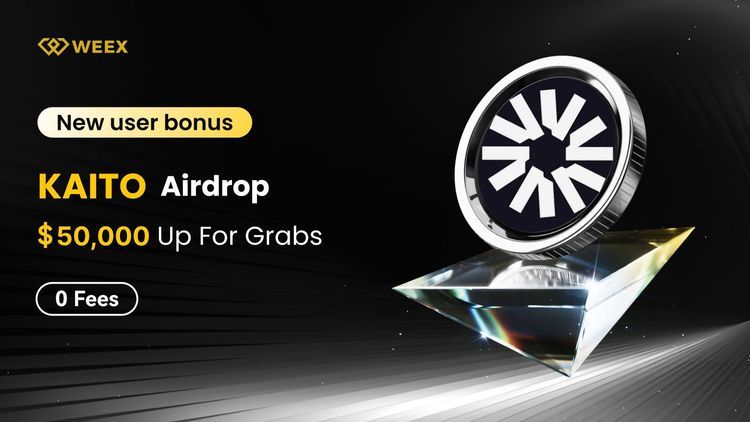
KAIO Airdrop: Share 50,000 USDT on WEEX with 0-Fee Trading
Trade KAIO/USDT with 0 fees on WEEX from May 7–14, 2026. New users can complete deposit and spot trading tasks to share 50,000 USDT in rewards.

What Is SAOS? Strategic American Oil Supply Token Explained
SAOS is a meme token on Solana with a 75,000 USD market cap and 22,000 USD locked liquidity, positioned around oil supply themes but lacking real asset backing
It thrives on pure narrative speculation, with no utility, website, or doxxed team, making it highly volatile and attention-dependent
Traders should distinguish SAOS from legitimate real-world asset projects, as its branding is speculative rather than substantive
Positive aspects include locked liquidity reducing rug pull risks, but low trading activity signals high uncertainty
How to Buy Public Asset Control (PAC) Token in 2026: Latest Solana Buying Guide
How to buy Public Asset Control (PAC) token in 2026, PAC contract address, Solana wallet setup, Jupiter swap guide, latest price, liquidity, and risks.

What Is Public Asset Control (PAC) Token and How Does It Work? Latest Solana PAC Token Guide
Public Asset Control (PAC) token explained. Learn what PAC is, how it works on Solana, current price snapshot, risks, and buying basics.

Can PAC Coin Reach $1 Soon? Analyzing Public Asset Control
PAC is a Solana-based meme token with a government-themed narrative, but it is highly speculative.
At its current price (~$0.0009) and 1B supply, reaching $1 would require a $1B market cap, which is very unlikely.
Short-term moves to $0.001 or $0.01 are more realistic, but the token is highly volatile due to low liquidity and hype-driven trading.
Overall, $1 is not a realistic target, and PAC is better suited for short-term speculation than long-term investment.

United Nations Oil Reserve (UNOS) Crypto: Solana Token, UN Links, and Risks
United Nations Oil Reserve (UNOS) Crypto explained: Solana token basics, UN links, oil-backing claims, market risks, contract checks, and buying cautions.

What Is Public Asset Control (PAC) Coin? Explained for Beginners
Public Asset Control (PAC) is a Solana-based token that uses a “government asset control” narrative involving oil and gold themes, but it has no verified ties to any real institutions or governments. It is mainly an entertainment-focused, speculative meme coin.
The project’s claims about links to entities like BlackRock or Palantir are unverified, and its own disclaimer states it is not a real financial or institutional asset. Like many new Solana tokens, PAC is highly volatile, with low liquidity and limited transparency, including no fully verified audit.
Overall, PAC is a high-risk speculative token driven by hype and storytelling rather than real utility. Beginners are advised to be cautious, verify contract details, and prioritize risk control before considering any trading.
What Is Official Saudi Oil Reserve (OSOR) Coin?
Learn what OSOR coin is, why its Saudi oil narrative matters, how to verify the contract, and what risks to check before trading.
Global Digital Oil Reserve (GDOR): What It Is, Risks, and How to Check It
Global Digital Oil Reserve (GDOR) is an oil-themed Solana token with unclear backing. Learn its risks, market data, and verification checklist.

Is OBC Crypto a Good Investment?
Is OBC crypto a good investment? We analyze the latest market data, holder concentration, liquidity risks, and short-term momentum. Read this before you invest in OBC token.

Can OSOR Reach $1? Full Price Analysis 2026
OSOR crypto price prediction 2026: Can Saudi Oil Reserve token reach 1? Read before buying.

What is International Oil Supply (IOS) Coin?
Wondering what is IOS crypto? Here’s a straight look at International Oil Supply (IOS) coin—the Solana token tied to oil reserve data. Contract address, risks, and what’s still unverified.

What Is the Unified International Token (UNIT)? Is UNIT Crypto Legit or Scam?
what is UNIT crypto? Here’s a breakdown of the Unified International Token ($UNIT), how it ties to BRICS+ data, where to buy it, and why it’s a conceptual project—not an official currency.
What Is Stablecoin Business OS (SBOS) Coin?
What is SBOS crypto? We break down Stablecoin Business OS, its USDC invoicing tools, AI finance assistant, token contract address, and real utility for online businesses.
NBIS Stock: What Nebius’ AI Cloud Surge Means Now
NBIS stock jumped as Nebius reported rapid AI cloud growth. See the key Q1 2026 numbers, catalysts, valuation risks, and what to watch next.
Grass Token Price: GRASS Live Data, Drivers, and Risks
Track Grass token price, market cap, supply, unlocks, and key GRASS price drivers before trading the Solana AI and DePIN token.
WCOR Coin Explained: World Collective Oil Reserve on Solana
WCOR coin is a Solana token tied to an oil-reserve registry narrative. Here’s what it claims, current data, and the risks traders should watch.
What Is SAOS Crypto? Can SAOS Hit $0.1?
Is SAOS crypto a hidden gem? Strategic American Oil Supply on Solana explained. No hype, just data: $75K cap, locked LP, RWA narrative.
KAIO Airdrop: Share 50,000 USDT on WEEX with 0-Fee Trading
Trade KAIO/USDT with 0 fees on WEEX from May 7–14, 2026. New users can complete deposit and spot trading tasks to share 50,000 USDT in rewards.
What Is SAOS? Strategic American Oil Supply Token Explained
SAOS is a meme token on Solana with a 75,000 USD market cap and 22,000 USD locked liquidity, positioned around oil supply themes but lacking real asset backing
It thrives on pure narrative speculation, with no utility, website, or doxxed team, making it highly volatile and attention-dependent
Traders should distinguish SAOS from legitimate real-world asset projects, as its branding is speculative rather than substantive
Positive aspects include locked liquidity reducing rug pull risks, but low trading activity signals high uncertainty


